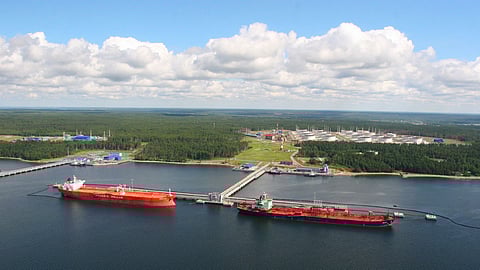


Russia’s seaborne diesel and gasoil exports rose three per cent in November from October to about 2.37 million tonnes despite recent US sanctions and infrastructure damage caused by drone attacks, data from market sources and LSEG showed.
Exports of ultra-low-sulphur diesel via Primorsk, Russia’s largest outlet for diesel shipments, surged 39.3 per cent month-on-month to 1.221 million tonnes as major producers completed seasonal and unplanned overhauls, the market sources added.
By contrast, exports from Russia’s southern ports fell sharply amid drone strikes on infrastructure and regional refineries. Russia’s Black Sea port of Tuapse suspended fuel exports on November 2, following Ukrainian drone attacks on its infrastructure, forcing its local refinery to halt crude processing.
At Novorossiysk, another Black Sea port, diesel exports fell by a third to 0.64 million tonnes due to unplanned maintenance at Lukoil’s Volgograd refinery and temporary loading suspensions following missile and drone attacks.
Despite US sanctions imposed on Russia’s largest oil companies in October, Lukoil and Rosneft, overall diesel volumes were largely unaffected in November.
Turkey remained the top buyer of Russian diesel and gasoil in November, with imports up 10 per cent month-on-month to 1.06 million tonnes, LSEG data showed. Shipments to Brazil also climbed to 190,000 tonnes, up from 74,000 tonnes in October.
Meanwhile, shipping data indicates a rise in ship-to-ship transfers near Limassol, Malta, and Port Said, Egypt, totalling nearly 0.5 million tonnes. The final destinations of these cargoes remain unclear.
Several tankers carrying about 270,000 tonnes of diesel from Russian ports have also yet to declare their discharge ports, according to LSEG data.
(Reporting by Reuters in Moscow; Editing by Emelia Sithole-Matarise)
