

Oil prices increased by more than one per cent on Monday as traders assessed the possible impact on crude flows from Venezuela. The country, home to the world's largest oil reserves, faces uncertainty following the US capture of Venezuelan President Nicolas Maduro.
Brent crude futures were up 96 cents, or 1.58 per cent, at $61.71 a barrel by 12:56 EDT. US West Texas Intermediate crude gained 95 cents, or 1.66 per cent, to $58.27.
Both benchmarks rose more than $1 in late morning trade after falling more than $1 earlier in a choppy session.
Investors digested news of Maduro's capture and that Washington would take control of the OPEC member, whose crude exports remain under a US embargo.
"The unknown for the oil market is how oil flows from Venezuela will change due to US actions," Aegis Hedging analysts said in a note.
The Trump administration did not consult with oil companies Exxon Mobil, ConocoPhillips or Chevron about Venezuela before or after US forces captured Maduro, according to four oil industry executives.
"I don't think you're going to see any company other than Chevron, who's already there you know, commit to developing this resource," said one of the executives. Venezuelan oil output has plummeted in recent decades, curbed by mismanagement and a lack of foreign investment.
Output averaged about one million barrels per day last year, equating to about one per cent of global production. Venezuela's acting president, Delcy Rodriguez, offered on Sunday to cooperate with the United States.
"I expect the naval attack and blockade to be lifted and, eventually, sanctions to be lifted," said Simon Wong, portfolio manager at Gabelli Funds.
He added that this would allow Venezuelan oil stuck at sea and in bonded storage to become available to the market.
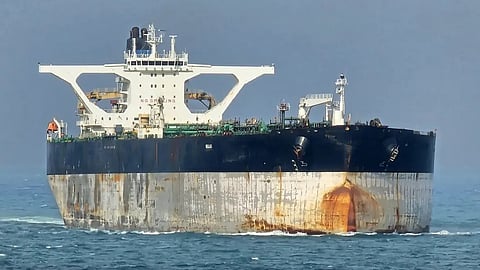
About a dozen oil tankers loaded with Venezuelan crude and fuel have left the country's waters since the start of the year. This occurred in apparent defiance of the US Government's blockade on exports, according to industry sources including monitoring service TankerTrackers.com.
US President Donald Trump also raised the possibility of further US interventions, suggesting Colombia and Mexico could face military action if they did not reduce the flow of illicit drugs.
Analysts are also awaiting Iran's reaction to Trump's threat to intervene in a crackdown on protests.
"There's clearly more geopolitical risk now," Simon Lack, portfolio manager of the Catalyst Energy Infrastructure Fund, said in a note. He added that there is a low but rising risk for US-backed regime change in Colombia or even Iran.
Elsewhere, the Organisation of the Petroleum Exporting Countries and its allies decided to maintain their output on Sunday.
(Additional reporting by Shadia Nasralla, Florence Tan, Yusuke Ogawa, Swati Verma, Arunima Kumar, Sudarshan Varadhan and Ahmad Ghaddar; Editing by Mark Potter, Jan Harvey, David Goodman, Alexander Smith and Bill Berkrot)
