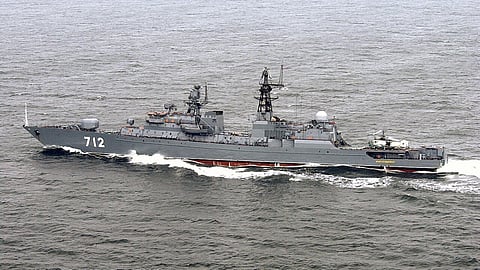
The Russian Navy frigate Neustrashimy reportedly struck the replenishment tanker Valentin Rykov during an unsuccessful attempt to refuel in rough seas near the Galloper offshore wind farm in the southern North Sea in October.
The incident had occurred outside UK territorial waters between October 21 and 23, The Telegraph reported on Saturday, November 21.
The Galloper wind farm lies approximately 30 kilometres off the Suffolk coast.
The Telegraph also reported that the vessels later refuelled in more sheltered waters off eastern Scotland. The Royal Navy offshore patrol vessel HMS Tyne monitored the ships, which were also tracked by a Royal Air Force MQ-9B Protector unmanned aerial vehicle.
The IMO's voyage planning guidelines treat forecasts, vessel condition, and manoeuvring limitations as grounds for changing a passage plan. They also call for contingencies such as a safe anchorage or port of refuge.
UK sanctions regulations bar Russian-flagged ships from UK ports unless entry is needed in an emergency or a port entry direction has been issued.
The UK's National Contingency Plan covers threatened pollution in UK territorial waters and the exclusive economic zone.
Under the plan, HM Coastguard can model oil drift and the Maritime and Coastguard Agency can mobilise counter-pollution resources.
However, the 1969 Intervention Convention excludes warships and other state-owned or state-operated ships used at the time solely for government non-commercial service from intervention measures under the convention, and the United Nations Convention on the Law of the Sea preserves their sovereign immunity.
Valentin Rykov is a Project 03182 tanker handed over to the Russian Navy in 2024 while Neustrashimy, the lead Project 11540 frigate, was commissioned in 1993 and began acceptance trials after modernisation in 2022.
