Germany has commissioned the construction and operation of a platform to recover and destroy wartime munitions dumped in the North Sea and Baltic Sea, the Alfred Wegener Institute (AWI) said on Thursday, October 22.
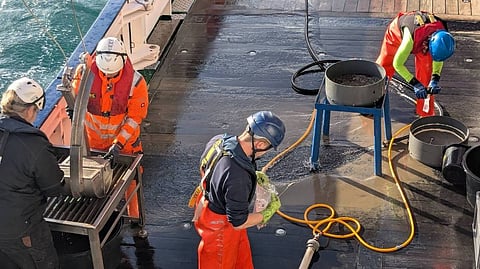
The AWI research vessel Heincke is meanwhile undertaking an expedition in the German Bight from October 17 to 31. The programme includes magnetic mapping of seven sites where munitions were dumped in preparation for a North Sea pilot recovery operation.
The federal environment ministry awarded the platform contract to the DSTAR consortium. Its members are Sweden's Dynasafe Demil Systems, explosive ordnance clearance specialist SeaTerra and shipbuilder Abeking and Rasmussen.
The ministry is targeting completion at the end of 2028. An expanded pilot recovery phase will begin in the Baltic Sea and later extend to the North Sea.
The expedition is also inspecting the wrecks of SMS Mainz and Blücher using two autonomous underwater vehicles (AUV) and a remotely operated vehicle (ROV). The team is taking water and sediment samples to test for explosive compounds.
SeaTerra is surveying the dumping sites with its magnetic survey equipment. The munitions at these sites lie buried beneath sand.
"This has never been done before and also the ordnance clearance service has little idea right now of exactly what we will find on the sea floor," said expedition leader Dr. Matthias Brenner.
The ministry estimates that 1.6 million tonnes of legacy munitions lie in German waters. Fugro joined a European consortium developing large-scale recovery methods in 2025.

