

Oil prices rose on Thursday, after two days of declines, as a larger-than-expected draw in US crude inventories provided some impetus for investors to buy futures while they monitor developments in Venezuela.
Brent crude futures climbed 24 cents, or 0.40 per cent, to $60.20 a barrel by 03:43 GMT, while US West Texas Intermediate crude was at $56.21 a barrel, up 22 cents, or 0.39 per cent.
Both benchmarks fell more than one per cent for a second day on Wednesday with market participants expecting ample global supply this year, including analysts at Morgan Stanley, who estimate a surplus of as much as three million barrels per day in the first half of 2026.
The declines led some traders to take an opportunity to buy futures on Thursday, said Mitsuru Muraishi, an analyst at Fujitomi Securities.
"Pullback buying has nudged prices slightly higher, but persistent oversupply concerns are capping upside momentum. While markets are watching developments in Venezuela, the downward trend is likely to continue for now," he said, forecasting that WTI will likely fall below $54.
US crude stocks dropped by 3.8 million barrels to 419.1 million barrels in the week ended January 2, the Energy Information Administration said, compared with analysts' expectations in a Reuters poll for a 447,000-barrel rise.
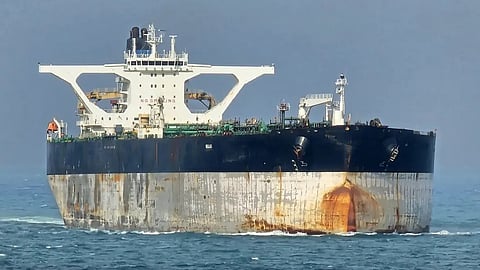
The US seized two Venezuela-linked oil tankers in the Atlantic Ocean on Wednesday, one sailing under Russia's flag, as part of President Donald Trump's push to dictate oil flows in the Americas and force Venezuela's socialist government to become an ally.
On Tuesday, Washington announced a deal with Caracas to get access to up to $2 billion worth of Venezuelan crude. Venezuela will be "turning over" between 30 million and 50 million barrels of "sanctioned oil" to the US, Trump wrote in a social media post on Tuesday.
This would provide a release valve for Venezuelan oil flows, which have been slowed because of a US blockade on sanctioned tankers leaving and entering the country. Directing this oil to the US may reduce the need for Venezuela to cut output due to storage constraints, ING analysts said in a note.
The deal initially could require the rerouting of cargoes that were bound for China, sources told Reuters. Chinese independent refiners that consume much of the country's Venezuelan imports could switch to Iranian oil to make up the shortfall.
Trump and his advisers are planning an initiative to dominate the Venezuelan oil industry for years to come, and the president told aides he believes his efforts could help lower oil prices to $50 a barrel, the Wall Street Journal reported on Wednesday.
A plan under consideration includes the US exerting some control over Venezuela's state-run oil company PDVSA, including acquiring and marketing the bulk of the company’s oil production, the report said, citing people familiar with the matter.
(Reporting by Yuka Obayashi in Tokyo and Siyi Liu in Singapore; Editing by Christian Schmollinger)
