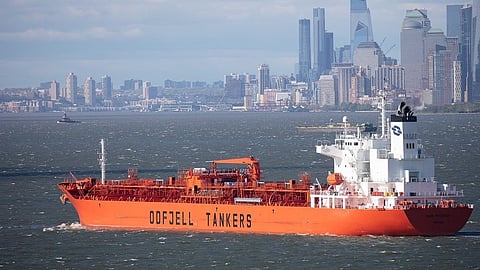

Odfjell reported a consolidated net profit of $155 million for 2025, which marked a decrease from the $278 million achieved in the previous year. The shipping group noted that although chemical tanker markets softened during the period, stable contract coverage helped maintain resilient earnings.
Total assets at the end of December 31 reached $2.036 billion, while cash flow from operations was recorded at $311 million. According to the company, these results reflected solid cash generation despite the market conditions and provided total liquidity of $344 million by the end of the year.
Revenues from chemical tanker activities fell to $1.113 billion from $1.247 billion in 2024. Total volumes transported by the fleet rose to 13.4 million tonnes, though the company stated that freight rates experienced a downward trend after the summer of 2024.
The company noted that a joint venture was established with Japan's Nissen Kaiun to secure access to high-quality tonnage and increase commercial scale. Odfjell currently has 22 newbuildings on order, which accounts for 14 per cent of the global orderbook in its core shipping segments.
A major technical development occurred in March 2025 with the installation of suction sails on the vessel Bow Olympus. This retrofit resulted in fuel reductions of 15 to 20 per cent, leading the company to expand investments in wind-assisted propulsion for several newbuildings.
The tank terminal segment generated gross revenues of $90.2 million, a slight increase from the $88 million reported in 2024. While operational performance remained solid in Korea and Belgium, results were affected by expenses related to a shareholder dispute at Odfjell Terminals US.
During the year, the group issued a five-year bond worth NOK1 billion ($97 million) to optimise its capital structure. Total interest-bearing debt stood at $709 million at year-end, down from $745 million at the start of January 2025.
Market prospects for 2026 are viewed with caution by the company as net fleet growth is expected to increase to more than seven per cent. Rerouting via the Cape of Good Hope is anticipated to continue throughout the year due to ongoing geopolitical instability, according to the group.

