

US natural gas futures fell about three per cent to a one-week low on Tuesday on forecasts for less cold weather and demand over the next two weeks than previously expected. Limiting losses was an increase in the amount of gas flowing to liquefied natural gas (LNG) export plants to near record levels.
Front-month gas futures for January delivery on the New York Mercantile Exchange fell 17.0 cents, or 3.5 per cent, to $4.742 per million British thermal units (mmBtu).
Financial firm LSEG said average gas output in the Lower 48 states held at 109.6 billion cubic feet per day (bcfd) so far in December, the same as November’s monthly record high.
On a daily basis, however, output was on track to fall to around 108.4 bcfd on Tuesday, putting it down about 2.8 bcfd since hitting a daily record high on November 28.
Record output has allowed energy companies to stockpile more gas than usual, leaving the amount of fuel in storage at about five per cent above normal for this time of year.
Meteorologists forecast weather across the country would remain mostly warmer than normal through December 24, reducing the amount of gas needed to heat homes and businesses.
LSEG projected average gas demand in the Lower 48 states, including exports, would slide from 143.7 bcfd this week to 142.6 bcfd next week. The forecast for next week was lower than LSEG’s outlook on Monday.
Average gas flows to the eight large US LNG export plants rose to 18.8 bcfd so far this month, up from a monthly record high of 18.2 bcfd in November.
In LNG news, Freeport LNG’s 2.4-bcfd export plant in Texas was on track to take in more gas on Tuesday in a sign that one of its three liquefaction trains returned to service after shutting down on Monday.
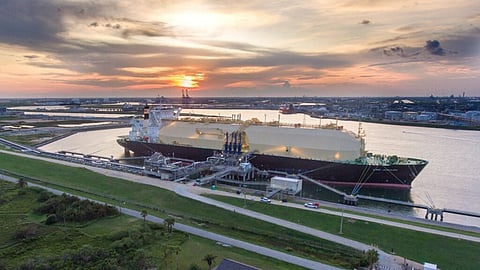
The Imsaikah LNG vessel, meanwhile, docked at Exxon Mobil/QatarEnergy’s 2.4-bcfd Golden Pass LNG export plant under construction in Texas, according to LSEG data. The ship is carrying LNG from Qatar that traders and analysts say will be used to cool equipment as part of the plant’s commissioning.
The facility is expected to start producing LNG later this year or early next year.
Around the world, gas prices held near 19-month lows of about $9 per mmBtu at the Dutch Title Transfer Facility (TTF) benchmark in Europe and $11 at the Japan-Korea Marker (JKM) in Asia.
Global prices have declined in recent weeks with a slow start to the winter heating season and hopes peace talks over Ukraine could result in lifting of sanctions against Moscow.
That could allow Russia, the world’s second-biggest gas producer behind the US, to export more fuel in the future.
(Reporting by Scott DiSavino, Editing by Nick Zieminski)
