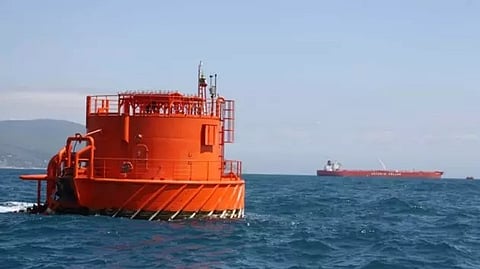


The Caspian Pipeline Consortium has repeatedly suspended operations this week because of safety concerns and a lack of tankers, numerous trading sources said, as the main export route for Kazakh crude oil struggles to recover from drone attacks.
Loadings from the pipeline, which carries about 1.8 per cent of global oil supply from Kazakhstan to Russia's Black Sea coast, have been disrupted since the middle of last month, adding to the supply outages linked to the US-Israeli war on Iran.
So far this week, the pipeline has been only briefly reopened and was closed on Wednesday, the sources said.
Shipowners have become reluctant to take on CPC voyages because of the threat of drone attacks.
Russian group FESCO on Tuesday suspended operations in the region, while one CPC Blend seller told Reuters it took several attempts to find a tanker to load a cargo in recent weeks.
Russia's Foreign Ministry on Monday accused Ukraine of attacking oil tankers during loading at the Caspian Pipeline Consortium terminal at Novorossiysk, and said that Kyiv was trying to destabilise global oil markets.
Kyiv has not claimed responsibility or made any comment on why it may have extended its campaign against Russia to a pipeline that carries crude produced largely by US and European oil majors.
None of the eight sources Reuters spoke to could be named because they were not authorised to speak publicly.
Kazakhstan's Energy Ministry said on Saturday that a complete halt to CPC operations was not under consideration and that the situation was under control. The ministry had yet to respond to a request for comment on Wednesday.
CPC declined to comment.
Landlocked Kazakhstan relies heavily on Russian ports to export crude by sea, meaning that pipeline and loading disruptions can force production cuts. In July, when attacks on tankers intensified, Kazakhstan's oil output fell by 14 per cent from June.
Tengizchevroil plans to export about 100,000 tonnes of oil by rail to Georgia's Black Sea port of Batumi in August, sources said. CPC Blend differentials have weakened due to the disruptions.
August-loading CPC Blend cargoes were offered at nearly $4 a barrel below dated Brent this week, compared with a premium to dated Brent just a few weeks ago, traders said.
(Reporting by Robert Harvey in LONDON and Reuters reporters in MOSCOW; editing by Barbara Lewis)
