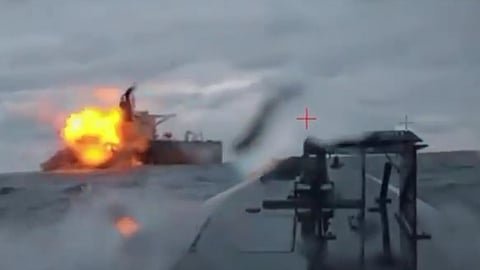


War insurance costs for ships sailing to the Black Sea nearly doubled on Tuesday after two Greek-managed oil tankers were hit by unidentified drones. This occurred while they were on their way to load crude at a terminal on Russia's coast, five industry sources said.
The Black Sea is crucial for the shipment of grain, oil and oil products. Its waters are shared by Bulgaria, Georgia, Romania and Turkey, as well as Russia and Ukraine.
The latest incidents have raised risk assessments for ships sailing to both Ukrainian and Russian terminals, the sources said. War insurance costs for port calls to Black Sea terminals have risen to one per cent of the value of the ship, from 0.6 per cent-0.8 per cent in late December.
Rates rose to their highest since 2023 in early December after a series of drone attacks on Russian-linked tankers. "Rapid risk escalation, with few indicators and warnings preceding, has become a hallmark of the Black Sea environment," said Munro Anderson of marine war insurance specialist Vessel Protect.
Ships sailing into Russian or Ukrainian Black Sea ports or terminals around the Sea of Azov require additional war-risk insurance, typically set for a seven-day period. These terms are reviewed every 24 hours.
In contrast, policies were typically reviewed every 48 hours last month. Black Sea war rates were extremely volatile and were changing on a daily basis, David Smith, head of marine with insurance broker McGill and Partners, said.
"Right now, they are spiking due to a number of incidents, and we wouldn’t be surprised to be quoted in excess of one per cent, dependent on the vessel's value, ownership or proposed port of call," Smith told Reuters.
It was not immediately clear who was behind Tuesday's strikes. These impacted a terminal that serves as a loading point for around 80 per cent of Kazakh oil destined for international markets.
(Reporting by Jonathan Saul; Editing by Jan Harvey)
