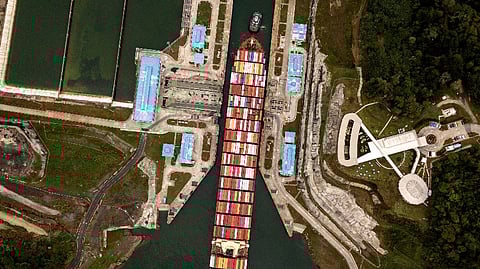


The Panama Canal Authority said on Thursday that some ships had recently paid more than $1 million for crossing slots at auction, but said the unusually high prices reflected a temporary rise in demand rather than persistent congestion at the waterway.
The authority said average auction prices had risen to about $385,000 after the start of the Middle East conflict, from around $135,000 to $140,000 before, as higher traffic boosted demand for reservations.
Last week, the authority had downplayed reports that an LPG vessel had paid as much as $4 million in an auction to secure faster passage.
Victor Vial, the canal's vice president of finance, said in a statement that some vessels had indeed paid more than $1 million in recent auctions, but described those results as exceptional and tied to a short-term rise in demand.
He added that most ships book their transits in advance, helping avoid queues.
The canal offers several booking mechanisms, including long-term slot allocations and a dedicated system for liquefied natural gas vessels. For ships that do not reserve ahead of time, it also offers last-minute reservations and auctions, with between three and five slots currently offered each day through the auction system.
Canal administrator Ricaurte Vazquez said container and liquefied petroleum gas shipments had been among the strongest-performing segments, with energy products taking on a bigger role in volumes handled by the waterway.
The authority also said it has been taking steps to preserve water levels at its retention lakes as it monitors the risk of a potentially strong El Nino later this year.
Deputy administrator Ilya Espino de Marotta said unusual rainfall during the dry season had kept Gatun and Alhajuela lakes at maximum levels, allowing the canal to build reserves.
"We do not foresee anything significant between now and December, but we are continuing to monitor the situation," she explained, adding that the goal was to keep lake levels as high as possible ahead of the next dry season.
In the past, drought has caused the canal to slash its daily crossings.
(Reporting by Elida Moreno; Editing by Aida Pelaez-Fernandez)
