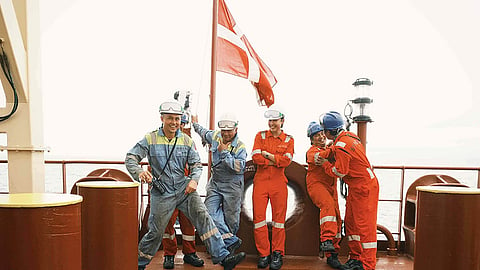


You cannot be unaware of the efforts that are being made by both benevolent and commercial interests to address various aspects of “wellbeing”, which is a good one-word description of a contemporary facet of human life.
Daily newspapers, the weekend supplements; all provide new and beguiling angles of this modern issue, whether it is some product designed to make you feel on top of the world, or a programme for your mental improvement. There is clearly money to be made in this sector.
Why should seafarers be excluded from this facet of normal shore-side living? Why should they meekly accept the burdens to which distance and their itinerant lifestyle have traditionally condemned them?
You might reasonably argue that the pressures of modern seafaring impacts upon their health as much as they ever did, even though they have connectivity and, at least in theory, more comfortable conditions than a few generations ago. But modern pressures also bear upon upon seafarers’ health and wellbeing in a way that demands more serious attention.
You only have to read the reports of fatigue-related accidents, or the incidence of self-harm among the seafaring workforce, or the failure to even begin to address the lack of shore leave, to know that there are real problems that need addressing by the industry.
Retention and recruitment figures, not surprisingly, after their treatment throughout the pandemic and in more recent times of global uncertainty, are causing concern. And it is probably fair to suggest that like the younger generation everywhere, they are just not willing to put up with the deprivations which seafarers accepted in the past. The clock cannot be turned back.
It is obvious that the sheer intensity of modern ship operations came about incrementally, with little thought as to the effects upon those who make it all happen. Inadequate crew numbers, constant 24/7 pressure to deliver, along with a multiplicity of regulatory layers, combine to make seafaring less of a rewarding occupation.
Crew connectivity is no more than what people want but has been described as something of a double-edged sword, alerting the seafarer to crises at home, but for which little of anything constructive can be done at such a distance.
And seafarer’s welfare organisations frequently cite loneliness as part and parcel of modern life afloat, where, in an era before tiny, multinational crews, there was arguably less of a problem.
There is a level of recognition about these very personal difficulties, with concerned employers using a variety of useful programmes to promote better mental wellbeing.
A recent initiative has been launched by UK-based nonprofit the Sailors’ Society in conjunction with the P&I club NorthStandard, which aims to place what they describe as support and wellbeing officers on members’ ships. A course, branded as "Sea Mate", will equip these individual crewmembers to become key support figures and someone a crewmember is able to talk to about problems that might otherwise become worse.
This directly addresses a genuine and identified need aboard many ships, with individuals bearing burdens that they find hard to share. The wellbeing officers are directly connected to the Sailors’ Society crisis response team, so they themselves are not trying to deal with problems on their own. It seems like a positive and practical effort by the two organisations.
Some have suggested that this feature of endemic loneliness is scarcely helped by the fact that ships, which were once far more social places, have become increasingly grim, with people off-watch, when they are not sleeping, glued to their personal devices behind their closed cabin doors.
Even mealtimes, often because of language difficulties in multinational-manned ships, are short and silent affairs, watchkeepers often eating alone and effectively seeing no one other than their relief from one day to the next. It does not seem to be a career for the more socially disposed person.
Could this be changed? You cannot force people to be more sociable and friendly, but a more active leadership, assuming they are not perpetually fatigued, could help. Pleasant recreation rooms, less institutionalised accommodation and a less po-faced attitude to alcohol by charterers who ought to have a vested interest in happier crews, with a decently run crew bar, would help no end.
Wellbeing officers are a good start.
