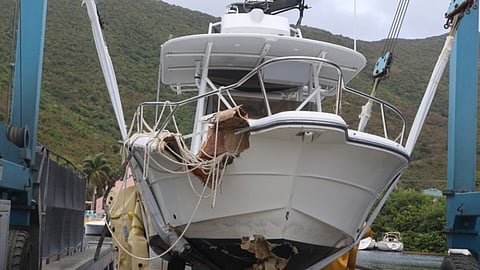

The Marine Safety Investigation and Reporting Authority (MSIRA) of the British Virgin Islands recently published its safety investigation report into the collision involving the speedboat Mojaito, which occurred on the night (local time) of July 26, 2025, in the Sir Francis Drake Channel south of Brandywine Bay, Tortola.
The incident occurred when the speedboat collided with a green steel lateral channel marker south of the Brandywine Bay entrance while transiting from Virgin Gorda to Road Town.
At the time of the collision, the vessel was travelling at approximately 28 knots during nighttime conditions. No fatalities were recorded, and all persons on board were safely assisted following the incident.
"The investigation revealed several safety factors associated with the incident," said Chief Marine Accident Investigator Jerome Padmore.
"These factors included an over-reliance on electronic navigation, a decrease in situational awareness during nighttime navigation, difficulties in maintaining an effective lookout despite having several people on board, challenges in maintaining a safe speed in a buoyed and heavily trafficked area after dark, and the necessity for timely communication regarding navigational changes to ensure safe navigation."
As part of the report, the MSIRA has issued safety recommendations to the BVI Ports Authority aimed at strengthening navigational safety across BVI waters.
These include improving coordination with the Virgin Islands Shipping and Maritime Authority to ensure the timely issuance of notices to mariners following buoy maintenance, relocation, or other changes affecting navigation, as well as enhancing communication protocols relating to aids to navigation to improve mariner awareness and overall navigational safety.
"I would like to remind all vessel operators that electronic navigation aids are intended to complement, not replace, proper visual navigation and the need for an effective lookout," Mr Padmore said. "Operators must navigate at a safe speed that is appropriate for the prevailing conditions, especially at night and in areas with increased activity."
Mr Padmore pointed out that safe speed does not merely refer to travelling slowly in open water, but involves adjusting speed according to the circumstances. This includes slowing down in channels, mooring fields, high-traffic areas, or anywhere that hazards, congestion, reduced visibility, or the presence of people could impact the safe handling of vessels.
Using sound judgment, following COLREGS, and practising responsible seamanship are essential for preventing collisions and injuries, the MSIRA said.

