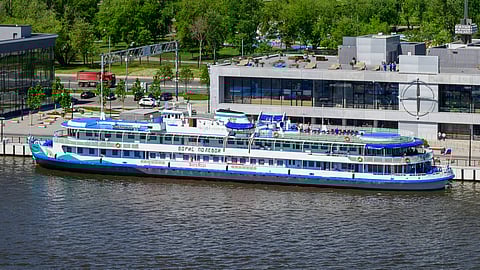


Modern electric vessels, digital solutions, and the development of coastal infrastructure are becoming part of a comprehensive mobility strategy currently implemented in Russia's capital city of Moscow, as confirmed by state-owned transport provider Mosgortrans.
A key element of this transformation is the Moscow Shipbuilding Yard, located in Nagatinsky Zaton. The enterprise was built within just 22 months and today serves as a hub for the development and production of new river-capable passenger vessels.
Currently, the shipyard is assembling several modern vessels of the Project Moskva 1.0 series, which will enter regular routes in the near future [examples of ferries from the same series are already being operated on the Moskva River by the Moscow Department of Transport and Road Infrastructure Development, ed].
"With the launch of high-tech production at the Moscow Shipbuilding Yard, the development of electric transport in the capital has accelerated," said Maxim Liksutov, Moscow's Deputy Mayor for Industry and Transport. "In 2026, we plan to launch eight electric vessels of the Moskva 1.0 project. These vessels, which have no global equivalent, will enter regular routes and create a new level of travel comfort."
Since the beginning of the year, specialists have laid the keels of two new electric vessels and have begun forming their hulls, while other projects are being developed. These include electric pleasure boats, unmanned boats for safety and environmental monitoring, as well as a hybrid cruise vessel designed for routes through Russia’s historic cities. The commencement of this vessel's construction is planned for the coming years.
Today, Moscow’s regular river transport fleet already includes several electric vessels. Each of these bears a name associated with the city’s geography. For instance, the vessels already in operation are named after Moscow’s rivers, while the new vessels that will join the routes this year will continue this tradition and be named in honour of the capital’s historic districts.
The development of river transport in Moscow is not limited to its transportation function alone. Electric vessels are also becoming platforms for educational and cultural initiatives.
In collaboration with the Russian Geographical Society and the Russian Musical Society, lectures and educational events are held on board some of these ferries. Passengers have the opportunity to learn about Russia’s natural diversity, the peculiarities of the Arctic, and the influence of music on human cognitive processes.
Since the beginning of the year alone, over a thousand people have attended such events.
Another important part of the revamped river system is the South River Terminal, which, after reconstruction, was transformed into a modern public space. It combines the functions of a transportation hub and a cultural centre, offering visitors a wide range of opportunities for recreation and participation in city events.
During its operation, the renovated terminal has welcomed hundreds of thousands of guests, and the number of events held has exceeded a thousand.
