

In 2009, BP was on a roll after its take-over of American rivals Arco and Amoco. BP produced just under four million barrels of oil equivalent (BOE) per day, the same as ExxonMobil, almost double the production of TotalEnergies, and 50 per cent more than Chevron that year.
Fast forward to today and things do not look so pretty. In 2025, BP produced only 2.3 million BOE daily, the same as TotalEnergies, but less than half of what ExxonMobil produced (4.8 million BOE), and only slightly more than half of what Chevron produced (4.1 million BOE). Amongst the super majors, BP has gone from joint first to joint bottom of six peers in the last sixteen years (the peer group being ExxonMobil, Shell, ConocoPhillips, Chevron and TotalEnergies; the data can be read here).
This week, we look at how bad strategy, bad luck, and bad management have combined to put BP in the centre of a storm.
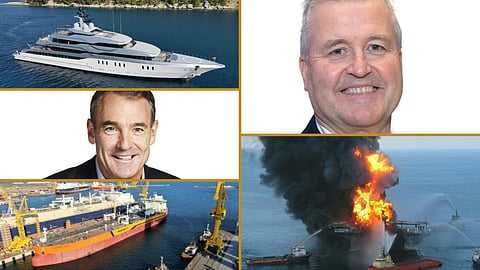
Some of BP’s chronic underperformance in the last 16 years has been down to the devasting impact of the Deepwater Horizon oil spill in the Gulf of Mexico in 2010, which left the company facing US$70 billion in costs for clean-up, fines and compensation, the largest corporate loss in history. These billions were incurred after the Macondo well blew out, sinking the semisub drilling it, killing 11 crewmembers onboard, and leading to millions of barrels of oil gushing into the Gulf of Mexico for three months. This resulted in BP having to sell upstream assets to fund the Deepwater Horizon costs, and set back its deepwater Gulf of Mexico developments by several years.
Thankfully, none of its major rivals have caused such large pollution (although Chevron’s legacy in the Amazon rainforest in Ecuador appears “controversial,” as is the simmering lawsuit against Shell for historic Niger Delta shallow water pipeline spills), nor have any paid such massive penalties.
But even without this unforced error at Macondo, what appeared to have been BP’s greatest international coup was turned into a liability by savage geopolitics.
The Russian invasion of Ukraine in 2022 was another calamity for the troubled company. BP had been a very successful early foreign entrant in the Russian domestic oil production business through the TNK-BP joint venture, which it formed in 2003 with a quartet of Soviet-born entrepreneurs, being Mikhail Fridman, Len Blavatnik, Viktor Vekselberg and German Khan.
Interestingly, it had previously sued their company in New York for attempting to illegally steal acquire the assets of a part BP-owned oil company in Russia through a court process in 1999, and the TNK-BP joint venture was part of the settlement. TNK stood for Tyumen Oil Company, and in its first five years of operations, TNK-BP paid out US$20 billion in dividends to its lucky shareholders.
BP successfully navigated pressure from its Russian “businessmen” partners, who repeatedly tried to kick the foreign oil company out of their lucrative business, and from President Putin’s government, which wanted to bring it under the control of the Russian state. In 2012 BP finally sold its half share in TNK-BP to Rosneft for US$12.48 billion in cash and 18.5 per cent of state-owned Rosneft’s own shares, and the oligarchs also exited with wheelbarrows of cash.
Following the deal, this gave BP a total 19.75 per cent interest in Russia’s largest oil company and made the British company the largest foreign investor in the Russian oil and gas sector.
Despite the Russian annexation of Crimea in 2014, Russian forces bombarding the Donbas and the murderous destruction of Malaysia Airlines flight MH17 that same year, BP’s stake in Rosneft was not impacted by the loose western sanctions on Russia that followed. By 2018, BP was receiving an annual dividend of US$620 million from its Rosneft shares, net of withholding taxes as per its annual report. The company assured investors in the report that, “BP remains committed to [its] strategic investment in Rosneft, while complying with all relevant sanctions.”
It was great… until 2022, when Russia invaded Ukraine, and BP announced its exit from Russia, including the divestment of its shareholding in Rosneft. Unfortunately, Rosneft accounted for around half of BP's oil and gas reserves and a third of its production. Divesting the 19.75 per cent stake in Rosneft resulted in a one-time write-down charge of US$24 billion in 2022.
Ouch!
It wasn’t all sunshine and flowers for its erstwhile partners in TNK, either. Mikhail Fridman was sanctioned by the US, the EU and the UK after the Russian invasion of Ukraine. Mr Fridman told the BBC that the imposition of sanctions by the British government left him "shocked" and that the government’s assertion that he was closely associated with Vladimir Putin was "absolutely incorrect". Despite these protestations, the sanctions remain.
The US Government had already imposed sanctions on Viktor Vekselberg in 2018 over alleged Russian interference in the 2016 US Presidential Elections, and again in 2022 over his ties to Putin. Spanish police impounded Mr Vekselberg’s US$90 million, 78-metre-long superyacht Tango in Mallorca last year. Last Friday, a Russian national, Vladislav Osipov, and a British citizen, Richard Masters, were charged with conspiracy to defraud the United States and to commit offenses against the United States by allegedly facilitating a sanctions evasion and money laundering scheme in relation to the yacht.
German Khan was also sanctioned by the EU and the UK after the Russian attack on Kyiv. It emerged that he owned millions of pounds of luxury property in the UK. In 2023, he lost a court battle in Luxembourg to have the sanctions removed.
But the fourth partner, Leonid Blavatnik, is now Sir Len Blavatnik, after he was knighted by the Queen for his charitable philanthropic work, just seven years after he obtained British citizenship in 2010.
He had the good luck or good foresight to sell all his Russian assets in 2013 after his US$7 billion exit from TNK-BP, and is now invested mainly in the developed markets, including the ownership of Warner Music. He married an American, generously sponsors galleries and universities, and owned a large and controversial share in Israeli news outlet Channel 13 until this March, when he sold it to an Israeli tech billionaire. In 2013, Mr Blavatnik was even made chevalier of the French Legion d'Honneur.
Ironically, BP’s former CEO John Browne had had to resign from the company in 2007 after he was found to have lied about his relationship with one Jeff Chevalier, the wrong sort of chevalier to receive. Of course, we now know there were a lot dodgier men named Jeffrey whom one could know at the time, as the former Prince Andrew, Lord Mandelson, and Sultan Ahmed bin Sulayem, the former CEO of DP World, appreciate to their cost.
However, Lord Browne would not be the last BP leader to put his sex drive ahead of his reason to the detriment of his career, as we shall see.
When we compare BP to its peers, the constant changes of senior leadership at the British company cannot have helped. ExxonMobil has had only three CEOs in 33 years, all of them company lifers: Lee Raymond, who served as Exxon‘s CEO from 1993 to 2005, and who masterminded the US$81 billion merger of Exxon with Mobil in 1999; then Rex Tillerson who was CEO from 2005 to 2016, before serving as US Secretary of State in the first Trump administration; now Darren Woods, who is in his tenth year as CEO since Tillerson’s retirement and who spearheaded the acquisition of Pioneer Natural Resources for US$59.5 billion in 2024.
At TotalEnergies, Patrick Pouyanné has been the Chairman and CEO since 2014, taking over when his predecessor Christophe de Margerie died in a tragic private jet crash in Moscow after seven years in the same post. Mike Wirth has been CEO of Chevron since 2018, and his predecessor John Watson was in role for eight years from 2010. At Eni, Claudio Descalzi has been CEO since May 2014 and Shell has had only four CEOs since 2004.
BP, on the other hand, has had five CEOs in less than seven years since January 2020, a big red flag. Tenure as CEO at BP is more akin to that of a disposable British Prime Minister or the manager of an unsuccessful football team, or even the shelf life of a supermarket vegetable, than an as an oil industry leader implementing a long-term strategy.
Bernard Looney succeeded Bob Dudley, the former boss of TNK-BP, in February 2020, and the company embarked on another pivot to renewables, buying offshore wind licences and promising that its oil and gas production would gradually fall, a move back to the “Beyond Petroleum” moniker Lord Browne had deployed two decades previously.
This may have made sense when the oil price was US$40 per barrel in 2020 during the Covid pandemic, but it started to look suicidal after Brent crude hit US$120 when Russia invaded Ukraine in 2022. Critics declared that BP was proof of the, “go woke, go broke,” mantra.
Mr Looney then had to resign in 2023 after a sex scandal when it turned out that he had been caught shagging engaged in undisclosed but consensual sexual relationships with female colleagues whom he had promoted before he was CEO. He had to resign when more complaints came in, despite promising he had confessed all regarding his colleagues as partners, after his first amorous workplace tryst was discovered by an unimpressed board.
The CFO Murray Auchincloss stepped up to replace Mr Looney and became CEO of BP in January 2024, promising a renewed focus on oil and gas.
BP’s longstanding but ineffective Norwegian chairman Helge Lund stepped down in October 2025 and was replaced by Albert Manifold. Mr Manifold was a dynamic Irish businessman who had made his name as CEO of Irish building materials group CRH from 2014 to 2025, driving a huge rise in its share price (400 per cent) and listing the company in New York in 2023.
At CRH, Manifold ruthlessly sold off underperforming businesses and paid himself tens of millions in the process. He was widely believed to be a hands-on leader in the style of an executive chairman, with a stellar reputation amongst investors.
With activist shareholder Eliot circling BP, and buying a five per cent stake in the company after BP delivered the lowest overall shareholder returns of its peer group in the five years to the end of 2025 (half what ExxonMobil delivered), many observers felt that perhaps a demanding outsider with a penchant for wearing hard hats and taking hard decisions was what the underperforming oil company needed.
Unfortunately, as we shall see later in the week, BP’s problems only got worse when the board decided that the chair they had appointed was not the right choice.
BP was quickly proving beyond perdition.
Background reading
What it lacks in successful performance, BP makes up for with its excellent corporate history on its website, here. For all its faults and failings, the company began with a massive oil discovery in what is now Iran in May 1908. In April 1909, the Anglo-Persian Oil Company was incorporated and listed on the London Stock Exchange, changing its name to British Petroleum in 1954.
