Russia plans to carry out more than 49,000 linear kilometres of hydrographic surveys along the Northern Sea Route (NSR) in 2026.
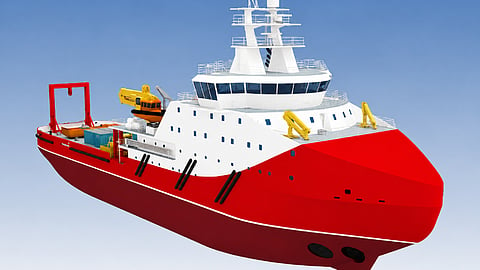
A new Arc7 ice-class survey vessel remains under construction to support the work.
The 2026 programme will use multi-beam echosounder systems to survey seabed relief and depths. This year, dozens of lighthouses and lighted navigation marks on the NSR coast and at river mouths used by seagoing vessels have been serviced or repaired. New deep-water routes have been established and existing ones refined.
Rosatom reported NSR cargo volume of 31 million tonnes between January and September 2026, 20 per cent higher than in the same period of 2025. The company has forecast at least 40 million tonnes for the full year.
Pavel Mikhalenko (Павел Михаленко), the lead hydrographic and buoy tending vessel of Project HSV05, is being built at Volga Shipyard in Nizhny Novgorod for Rosatom. She will carry hydrographic equipment, a dynamic positioning system and a diving complex for underwater work, including inspections of hydraulic structures. Oil spill response equipment is also planned.
The vessel's intended duties include surveying high-latitude routes, servicing navigation infrastructure, and transporting specialists to remote parts of the Arctic. The operator, Hydrographic Enterprise, has said the vessel could extend the NSR navigation season by several months.
The vessel’s keel was laid on October 27, 2023, and completion was originally scheduled for the end of 2024.
The shipyard reported hull readiness of 94 per cent in June 2026, with engines and generators installed, and began fitting the wheelhouse in August.
Three Project HSV05 vessels were initially planned.
Upon completion, the vessel will have a length of 69.99 metres, a beam of 15.4 metres and a draught of 6.2 metres. She will accommodate 15 crew and up to 35 specialists.
Her design speed is 12 knots with a range of about 10,800 nautical miles and an endurance of at least 40 days. She will also be able to operate in ice 1.5 to 1.7 metres thick.
Design work on the vessel was undertaken by the Marine Engineering Bureau based in Saint Petersburg.

