
Camera lenses and binoculars that spend long periods of time on boats are at serious risk from fungus growth. This stuff is an amazing life form. It can grow on glass and somehow extract enough nutrients and moisture from the air to maintain life.
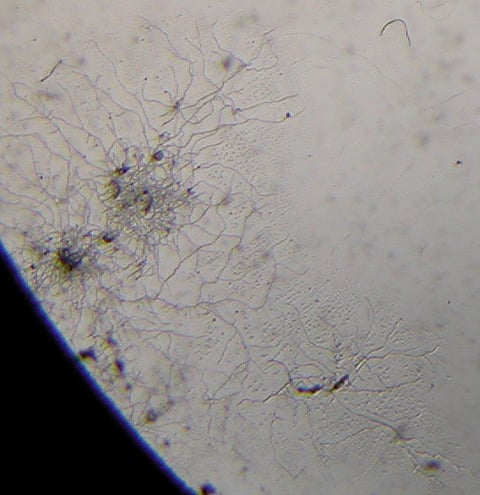
At a glance it's almost invisible but if you hold a lens up to the light, look inside and tilt it around it will become obvious if it's present. It looks like a small discoloured patch with spidery threads extending out. If not removed it first damages the lens coating and eventually even etches into the glass itself.
Once started it also tends to grow and spread. The optical effect is to diffuse light thus clouding the image. The process is slow but ongoing and over a couple of years it can turn a $2000 lens or binoculars into useless junk.
This isn't generally any problem with equipment that is only occasionally used in the marine environment for a few days or even a couple of weeks but is a very real concern where ongoing marine exposure is involved. In the latter case it is important to check over lenses every once in a while and to remove any fungus growth as soon as possible when it is found.
For growth on the outer side of lens elements wiping with a tissue wetted with alcohol is usually effective. Fungus on inside elements is a much bigger problem. Disassembly requires special tools and the complexities of a modern camera lens with its miniature precision machinery to operate focus and aperture is daunting. It's a job for a specialist camera repairman and it isn't cheap; but, the choice is either that or a write off.
Prevention
Prevention is a better option. Keeping lenses clean is important. A fingerprint is fertiliser for lens fungus. It can quite literally live on the smelly of an oily rag. In high humidity leather cases for cameras, lenses and binoculars are almost a guarantee of fungus. That characteristic smell of leather comes from organic molecules and is a fungus feast.
A cool dry place to keep optical equipment is best and today air conditioning often provides this. Where this isn't possible a sealed container with a cloth bag of silica-gel to remove moisture works well as long as the silica-gel is baked dry whenever its blue colour (when dry) turns to pink indicating it is saturated with moisture.
This photo is what a bad case of lens fungus looks like:
By Dr. Walter A. Starck
