
Russia plans to raise more than RUB200 billion ($2.35 billion) from exporters to finance the construction of icebreakers for its Arctic sea route, according to a draft government decree published this week.
Russia is seeking additional sources to finance the development of transport infrastructure as it grapples with a budget deficit and rising war costs. Here are some details about the plan, which was drawn up by the Transport Ministry.
A shipbuilding fee of RUB20.07 ($0.2363) per tonne of cargo would be payable by 27 Russian companies operating Russian-flagged vessels and using them to export cargo through Russian ports. This is projected to raise over RUB200 billion in the next 10 years.
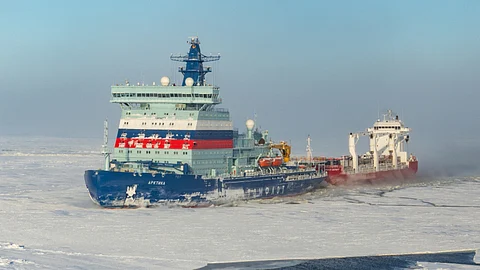
The money would be used to build the fifth and sixth icebreakers in Russia's Project 22220, the Leningrad and Stalingrad, without resorting to budget funds.
Without the new vessels, the document says cargo volumes on the Northern Sea Route could decline, including from oil and gas projects operated by producers Novatek and Rosneft.
If the cargo fee was not imposed, the cost to clients of using Russian icebreakers would amount to RUB52 million ($612,124) per day, more than nine times more than the level deemed reasonable.
The Northern Sea Route, navigable in summer and autumn, links Russia's western ports to Asia via the Arctic, cutting shipping times by up to 10 days compared to the Suez Canal.
President Vladimir Putin has championed the project and said that cargo turnover via the route will double to 70 million tonnes annually by the end of this decade.
(Reporting by Oksana Kobzeva and Gleb Stolyarov; Editing by Mark Trevelyan)
