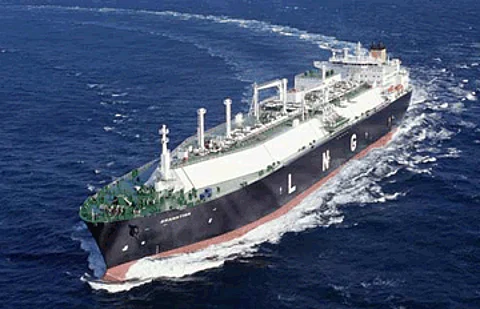

Japanese shipbuilders hope a combination of a weakening yen and the United States' shale gas boom will stoke demand for liquefied natural gas tankers, reports The Nikkei.
In August, Japan Marine United – formed through the integration of IHI's and JFE Holdings' shipbuilding businesses – won preferential negotiating rights to build an LNG carrier that Tokyo Gas plans to use in 2017 for a large-scale project in Australia.
Unlike the rounded tanks used in most Japanese LNG carriers, JMU uses square-shaped self-supporting prismatic type-B (SPB) tanks, which experts say are better suited for vessels of 180,000 cubic metres or more due to a larger capacity and greater stability.
JMU has a dedicated manufacturing facility at IHI's Aichi Works, continues the Japanese news agency, and if it can clinch the Tokyo Gas deal, it will mark the first order in 24 years for an SPB-equipped Japanese LNG carrier.
Because the US has recently started exporting shale gas, there has been a sharp rise in demand for LNG carriers worldwide. Currently, there is global demand for fewer than 400 LNG vessels, but that number is expected to jump to more than 700 ships by 2030, according to The Nikkei.
Japanese gas and power companies are racing to procure LNG from the US and utilities and other firms are already participating in three major LNG export projects there, The Nikkei continued.
Those projects alone will require about 30 LNG vessels, and Japanese shipbuilders have begun negotiations for LNG tankers slated for use in 2017.
Priced at twice the cost of a large oil tanker, LNG vessels are especially profitable for Japan's shipbuilders and the country's shipbuilding sector is in a strong position to win orders.
Source: The Nikkei
