
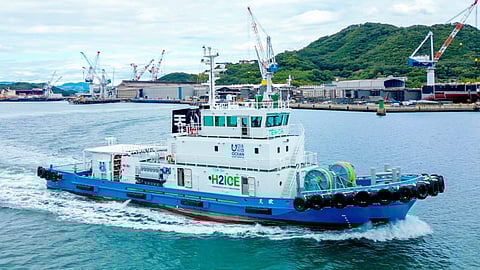
VESSEL REVIEW | Ten-Oh – Japanese demonstrator tug fitted with hydrogen dual-fuel propulsion
Tsuneishi Shipbuilding recently delivered Japan's first hydrogen-fuelled tug.
Ten-Oh (天歐) is equipped with a high-power hydrogen dual-fuel engine and a high-capacity high-pressure hydrogen gas storage and supply system supplied by JPN H2YDRO, a joint venture formed by the Tsuneishi Group and Belgian engineering firm CMB Tech.
The Tsuneishi Group has been working on the development and construction of the tug as part of a project by the Nippon Foundation to develop a vessel with zero CO₂ emissions.
Agile platform fitted with hydrogen propulsion

Ten-Oh has an LOA of 38 metres (120 feet), a beam of 9.6 metres (31 feet), a depth of 4.2 metres (14 feet), and a gross tonnage of 289. The tug boasts a high degree of manoeuvrability and strong engine output, which are essential in low-speed handling of larger ships as they enter and leave port.
The tug is equipped with two Behydro 12-cylinder hydrogen dual-fuel engines each rated 4,400 hp (3,300 kW). Tsuneishi said these will enable the vessel to generate approximately 60 per cent fewer CO₂ emissions compared to tugs fitted with engines that run on conventional fossil fuels.
Around 250 kg of hydrogen is stored in high-pressure tanks. Tsuneishi expects this arrangement will ensure operational performance similar to that of vessels using conventional fuel.
Flexible propulsion arrangement allowing for continuous operation
In the unlikely event of a failure of the hydrogen fuel system, it is still possible for the tug to use traditional marine fuels as backup, thus ensuring the same level of safety as a conventional vessel.
Ten-Oh began conducting demonstration sailings in 2025. The trials, which will last in 2026, will also include hydrogen bunkering operations.
The tug was built in compliance with ClassNK requirements.
