
In recent weeks, I have found myself dwelling on events during the Iran-Iraq War of the early 1980s.
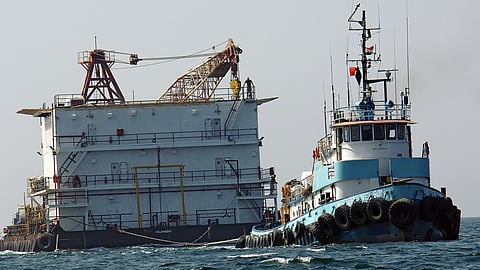
Anyone who worked in the Persian Gulf during the so-called Tanker War will have similar horrible memories, but the casualties were not confined to tankers. A number of tugs, workboats, and supply vessels were attacked as they went about their lawful pursuits, and many of us lost some friends and colleagues to both Iraqi and Iranian missiles.
Perhaps these tragedies happened before the internet became all-pervasive, which might explain why there is so little information available today.
I searched for records of lost colleagues and was only able to find a mention of one man – an Australian chief officer who is mentioned on an Australian military site. As for any mention of the wives and children left behind by our lost colleagues, there is nothing.
Fortunately, I worked for a family company that took its responsibilities seriously, and I know the wives and families of my colleagues were taken care of.
I suspect, however, that there were far more who were left to fend for themselves by the people who employed their lost husbands and fathers.
Somebody commented recently that when ships are attacked, they are treated as objects, and there is seldom any mention of the human beings who operate them. Some things never change.
One of my most vivid memories from that time is the row of burned-out tankers anchored off Dubai. One in particular is etched in my mind because it appeared to have no accommodation block – the fire had burned with such intensity that the accommodation had simply melted and flowed into the machinery spaces.
The fate of the crew does not bear thinking about.
And now, less than 40 years later, another war has erupted in the region. This time, the reasons are even less clear and events seem to be dictated by people who are incapable of rational thought and are blind to the human consequences.
More than 100 civilian seafarers have already died, although I doubt whether any of us could name even one of them.
The first tug has already been attacked. Mussafah 2 was hit by Iranian missiles as it rushed to assist the Maltese-flagged Safeen Prestige on March 6. Four crewmembers were killed and three were injured although, again, I doubt whether any of us could name even one of them.
There are reports of insurance interests urging salvors and SCRs to rush to the gulf to deal with the casualties, but I hope the salvors are resisting.
They will go eventually, of course, because they always do, but I fervently hope they will stay safe until the danger has passed. The thought of damaged ships drifting around the Persian Gulf leaking oil, suffering further structural damage, and eventually grounding or sinking is horrible, but not nearly as horrible as one more innocent tug person losing their life.
I suspect the conflict will drag on for some considerable time. The Iranians are formidable adversaries, as Saddam Hussein discovered during the Iran-Iraq War. At the time, Saddam was favoured and materially supported by the USA, Russia, and several European countries (although, as is their wont, the Americans were apparently selling weapons to both sides).
Despite this, Saddam’s attempted invasion of Iran failed, the Iranians could not be defeated, and nobody emerged as a clear winner. The losers, as always, were the 500,000 people who died during the conflict.
George Santayana reminded us in 1905 that, "those who cannot remember the past are condemned to repeat it," and here we are again. I only hope our colleagues who work in the region will be safe, but this seems unlikely.
Alternatively, I would hope that those in power quickly come to their senses, but this seems even more unlikely.
