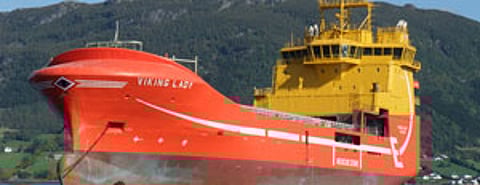

When mayors from all over the world convene to study how environmental technology can improve life in big cities, they will do so aboard the first large-scale ship ever with a fuel cell installed.
At a special event during the Copenhagen Climate Summit for Mayors, which runs parallel to the United Nations Climate Change Conference in Copenhagen (COP15), mayors from cities like Tokyo, Bristol and Rio de Janeiro will board the supply ship 'Viking Lady' for a cruise around the Copenhagen Harbour and into Oresund.
During the event, Copenhagen's Lord Mayor Ritt Bjerregaard will show her international guests how wind turbine co-ops, waste management and incineration plants have helped improve air quality and reduce Copenhagen's carbon dioxide footprint. The event will also illustrate how cities that host harbours have a potential to hold shipping to stricter emissions standards.
The 'Viking Lady' is a state-of-the-art supply vessel, which operates on a combination of combustion engines and fuel cell – all operating on liquefied natural gas (LNG). The fuel cell is the first ever on board a large-scale commercial ship. The fuel cell uses fuels more efficiently and helps curb harmful emissions and noise during the ship's frequent stops in busy harbours.
"The 'Viking Lady' is living proof that the technology required for more environmentally sustainable sea transport is already available, if we are willing to put it to use," said Per Wiggo Richardsen from FellowSHIP, the consortium behind the 'Viking Lady'.
"While emissions from international sea transport may be a matter of global regulation, shipping is also a matter of local concern, especially with regards to air quality around large coastal cities worldwide. By operating on clean energy while at dock, the 'Viking Lady' contributes towards cleaner air and improved public health, and also helps curb emissions that cause global warming."
The shipping industry transports more than 85 percent of all global trade and is responsible for three percent of total global carbon dioxide emissions. The technology on board the 'Viking Lady' cuts carbon dioxide emissions considerably and reduces harmful nitrogen oxide emissions equal to the emissions from 22,000 cars annually.
"Emissions from cargo ships are a great challenge to the world's cities – especially those on the coast line," said Ms Bjerregaard. "This boat trip is a great opportunity for mayors of the world to investigate the potential of next-generation vessels – and at the same time learn more about Danish energy policy and how Copenhagen has integrated climate technology, such as the offshore wind farm Middelgrunden, into the city's efforts to improve air quality and lessen the city's carbon dioxide footprint."
The 'Viking Lady' will dock at Kvæsthusmolen pier in Copenhagen on December 16 and 17. After the Lord Mayor and her guests have disembarked on the second day of the ship's visit, the 'Viking Lady' will return to active duty in the North Sea.
