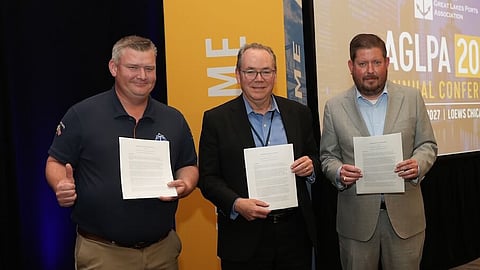

The American Great Lakes Ports Association (AGLPA) has entered into a memorandum of understanding (MOU) under which it will form a new partnership with the Great Lakes Alliance of Shipyards.
AGLPA said the MOU marks the first formal partnership between the US Great Lakes port and shipyard communities.
Under the MOU, the organisations will coordinate on priorities that include shipbuilding, vessel repair and modernisation; fleet renewal and the construction of American-built vessels; cargo growth, export opportunities and trade development; port and shipyard infrastructure; workforce recruitment and training; and federal policies and investments affecting the Great Lakes maritime economy and broader national maritime priorities.
AGLPA said that, although voluntary and non-binding, the agreement will create a standing mechanism for ports and shipyards to coordinate on shared priorities and pursue initiatives of mutual benefit.
"The founding organizations envision an expanding coalition capable of advancing US shipbuilding, improving the region’s transportation network, supporting industrial growth, and generating economic activity throughout the Great Lakes," said AGLPA.
Additional shipyards and maritime organisations may participate in the future with the approval of the original signatories.
"Closer coordination will help us identify new opportunities for vessel construction, repair and modernisation while supporting the infrastructure and commercial activity necessary to sustain a thriving Great Lakes maritime economy," said John A. Witte, Jr., President and Chief Executive Officer of AGLPA member Donjon Marine.
"Our organisations can work together to move more cargo, make the case for strategic federal investment, expand domestic maritime capacity, and ensure the Great Lakes play a larger role in America’s transportation and economic future," added Brian Oszakiewski, AGLPA Executive Director. "We also expect this effort to grow as additional shipyards join us, broadening the coalition and creating new possibilities for the entire region."

