

A barrage of Ukrainian drone attacks on Russia's Black Sea oil export facilities, as well as storms and severe ice conditions in the Baltic Sea slowed Russian oil exports this month, data showed on Friday.
The United States on Thursday issued a 30-day waiver for countries to buy sanctioned Russian oil and petroleum products stranded at sea, in a bid to stabilise global energy markets roiled by the Iran war.
However, the drone attacks and bad weather mean the easing of the US restrictions may not provide a significant and immediate boost to Russia's oil exports.
Russian oil supplies through the Druzhba pipeline via Ukraine to Hungary and Slovakia remain halted following what Kyiv said was an attack by Moscow on the pipeline on January 27.
According to ship-tracking data from LSEG, Russia's total oil exports on March 1-12 declined by 14 per cent from the same period last month to 3.6 million barrels per day.
Exports from Russia's Far East, however, increased by around a quarter for the period to around 770,000 bpd, the data showed.
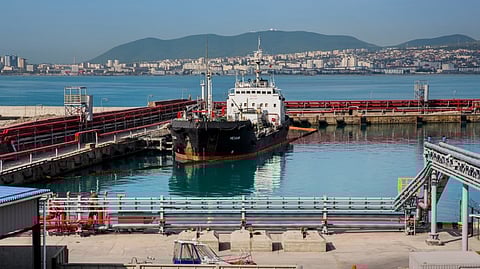
Exports and transit of oil at the Black Sea port of Novorossiysk were running up to 10 days behind schedule amid persistent storms and drone attacks, one of which forced a suspension of loadings early this month, according to three sources and Reuters estimates.
Novorossiysk resumed oil transshipment to tankers on March 6 after a drone strike on the Sheskharis terminal on March 2.
However, the pace of loading remains low, as the port is frequently forced to halt operations and move tankers away from the berths due to the threat of drone attacks.
(Reporting by Nerijus Adomaitis; Editing by Susan Fenton)
