
Dubai-run GMS has applied for a US licence to buy and scrap ships seized by the US Government linked to Venezuelan oil trading, the leading ship recycler's CEO told Reuters.
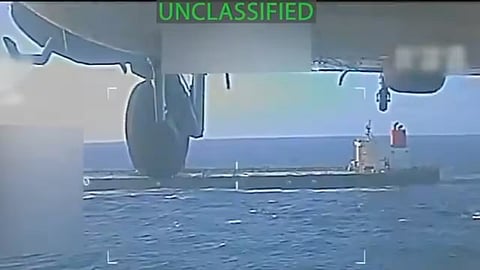
The US military and Coast Guard have seized seven vessels in recent weeks in international waters that were either carrying Venezuelan oil or have done so in the past.
The seizures were part of Washington's campaign to force Venezuelan President Nicolas Maduro out of power that culminated in US forces capturing him on January 3.
The ageing vessels, part of the so-called shadow fleet which typically do not have known insurance or ship safety certification, are a risk for oil spills while they remain on the water.
GMS, which describes itself as the world's largest buyer of ships and offshore vessels for recycling, buys vessels and then sells them to ship-breaking yards including in India and Bangladesh, which are home to the world's biggest shipping scrapping industries.
Its founder and CEO Anil Sharma described the shadow fleet tankers as "a ticking time bomb", but said that because they are sanctioned, they cannot be recycled without a licence.
"Hopefully the (US) government fast-tracks this," he said.
The company has also held discussions with the State Department in recent weeks, it said.
While the US Treasury did not generally comment on licence applications and related correspondence, "to safeguard maritime safety, we are committed to responsible solutions to get these designated vessels off the water", a Treasury spokesperson said in response.
The scrap value of such ships typically reaches tens of millions of dollars, depending on the type of vessel and its weight.
The US Government has filed for court warrants to seize dozens more tankers linked to the Venezuelan oil trade, sources told Reuters.
Detaining the seized vessels requires US government agency support, including from the US Coast Guard, which ties up resources and costs, shipping industry sources said.
In 2025, 16 tankers that were hit with sanctions were recycled in yards willing to take them, versus one tanker in 2024 and one in 2023, GMS analysis showed.
The vessels were recycled via non-US dollar transactions, according to the GMS analysis.
Such scrapping activity would have been in breach of US restrictions and could have involved potential sanctions penalties due to the vessels being blacklisted, industry officials said.
GMS, which is incorporated in the United States, bought the North Korean-flagged bulk carrier Wise Honest in 2019 from the US Government in a public auction for recycling. The vessel was seized by Indonesia in 2018 and forfeited to Washington for US sanctions violations.
Sharma said that despite the banking complexities of that transaction, even with a US sale approval, it showed there was a "precedent" to disposing of ships that breached sanctions.
The overall fleet working with sanctioned oil from Russia, Iran and Venezuela includes 1,423 tankers, of which 921 are subject to US, British or EU sanctions, according to analysis from maritime data specialist Lloyd's List Intelligence.
(Reporting by Jonathan Saul and Timothy Gardner; Editing by Jan Harvey)
