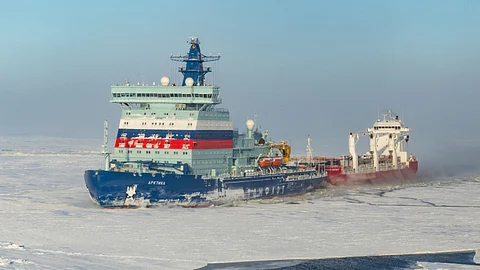


Russia exported 21 million barrels of oil to Asia via the Northern Sea Route (NSR) during the July-November navigation season, up around 50 per cent from last year, according to traders and shipping data, as disruptions on traditional routes boosted the Arctic corridor's appeal.
With the harsh winter season approaching, traders said oil shipments via the route appeared to have ended for this year.
The NSR, which links Russia's western ports with Asian markets through Arctic waters, is typically more expensive than southern routes, because tankers require icebreaker assistance. But traders said the route became more attractive this year as security risks and disruptions affected shipping through the Red Sea, the Strait of Hormuz and the Black Sea region.
Earlier this year, freight rates surged as the Iran and Ukraine wars disrupted shipping markets, increased insurance costs and reduced vessel availability. The resulting jump in transportation costs made the higher expense of using the NSR relatively less burdensome for exporters, traders said.
Cargoes from the northern port of Murmansk are expected to revert to the traditional route to Asia via the Red Sea during the winter months, increasing delivery times and transportation costs, traders said.
At the same time, freight rates for Russian oil have eased from recent highs due to greater tanker availability and a modest improvement in maritime security, according to Reuters calculations based on market data.
Rosatom, the state corporation that oversees the NSR and provides icebreaker services, did not respond to a request for comment.
Transit cargo volumes via the NSR are expected to double this year to a record seven million tonnes, Rosatom official Vladimir Panov said last month, though he did not specify oil volumes moved along the route. Russia also supplies LNG and container cargoes through the NSR.
Rosneft's flagship Vostok Oil project in northern Russia, which launched exports in September, delivered its first oil cargoes to China via the NSR, shipping data showed.
Vostok Oil is continuing to load crude cargoes, according to LSEG data, though most shipments are now being transferred to larger tankers near Murmansk before heading to international markets via the Red Sea route.
The Arctic route has become increasingly important for Moscow as it seeks to strengthen trade links with Asia and develop northern export infrastructure amid a broader reorientation of Russian energy flows toward eastern markets.
(Reporting by Reuters; Editing by Joe Bavier)