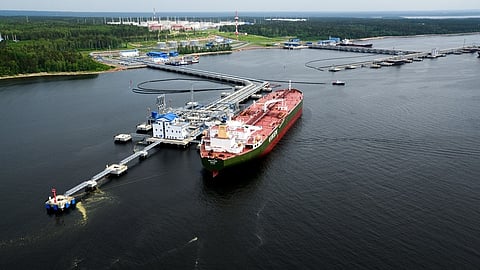


Russia's seaborne oil product exports in March rose 0.9 per cent from February to 8.9 million tonnes despite disruptions caused by drone attacks on key ports, data from industry sources and Reuters calculations show.
In late March, drone strikes on the Baltic ports of Primorsk and Ust-Luga sparked fires at fuel storage tanks and terminal infrastructure while persistent storms and further drone strikes forced a halt to loadings at the Black Sea port of Novorossiysk early last month.
A ban on non-ice-class tankers entering Russian Baltic ports narrowed vessel availability, also hampering loadings last month, traders said.
March oil product exports from Russia's Baltic ports — Primorsk, Vysotsk, St. Petersburg and Ust-Luga — declined by four per cent from the previous month to five million tonnes, data from the industry sources shows.
Fuel loadings for export via Black Sea and Azov Sea ports rose last month by 10.3 per cent from February to 3.13 million tonnes, the data showed.
Oil product exports from the Arctic ports of Murmansk and Arkhangelsk increased in March to 80,100 tonnes, up from 30,400 tonnes the previous month.
Fuel export loadings at Russia's Far East ports fell last month by 7.2 per cent month on month to 683,200 tonnes, the data shows.
(Reporting by Reuters Editing by David Goodman)
