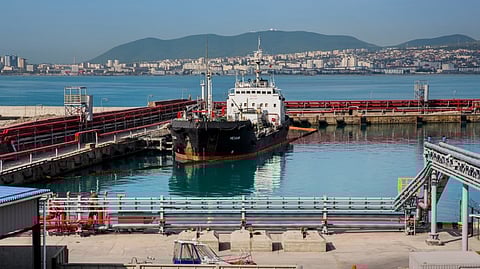


Exports and transit of oil through Russia's western ports rose by around 150,000 barrels per day (bpd), or about nine per cent, in the first two weeks of May versus April, according to data from traders, LSEG and Reuters calculations.
Ongoing drone attacks on Russian refineries are forcing Moscow to increase crude exports, although traders warn spare capacity in the Transneft pipeline system is nearing its limit.
Exports and transit of Urals, KEBCO and Siberian Light via Primorsk, Ust-Luga and Novorossiisk, including carry-over volumes, averaged about 2.35–2.4 million bpd between May 1 and May 15, up from roughly 2.2 million bpd in April, according to Reuters' estimates.
Market participants said exports could remain elevated in May in the absence of fresh disruptions to port or pipeline operations.
"There is still spare crude in the system, companies want to ship, and demand remains strong," one industry source said.
The increase in early-May loadings was largely driven by Novorossiisk, which handled carry-over cargoes from April totalling around one million tonnes in the first 10 days of the month. Loadings there rose to about 0.7 million bpd in the first half of May, from roughly 0.5 million bpd in April.
The port briefly halted tanker loadings last month following a drone attack, and traders said loading rates slowed after operations resumed.
Primorsk kept shipments broadly steady at just over 1.1 million bpd, while Ust-Luga loadings held at around 0.6 million bpd.
Drone attacks on Russia's energy infrastructure have increased in 2026, with the number of refineries targeted doubling since the start of the year, according to official data, social media reports and Reuters estimates.
Urals crude remains in demand in Asia, supported by constrained shipping through the Strait of Hormuz linked to the conflict in Iran. Premiums in India have eased to $2 to $4 per barrel versus Brent, from $6 to $7 for May-loading cargoes, but Russian crude still trades at a premium.
(Reporting by Reuters; Editing by Diti Pujara)
