

The world's energy traders are sending a consistent message about 2027: They do not expect global energy markets to become calmer anytime soon.
With confusion still reigning over the fate of energy production and flows from the Middle East and Russia, traders are not betting on a return to the stable and predictable energy system that existed before Russia's invasion of Ukraine snarled global gas markets in 2022.
From tanker freight rates and refining margins to diesel, gas and power futures, energy markets are pricing a future where geopolitical tensions remain high, supply chains remain vulnerable and key fuel products remain in short supply.
The clearest signal comes from the routes connecting the world's biggest oil-producing region with its largest energy-consuming markets.
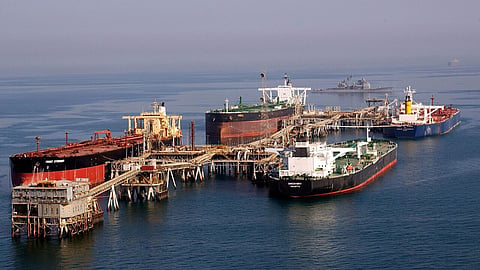
Daily time charter rates for tankers sailing from the Middle East to China have topped $600,000 for only the second time in history, according to LSEG, as the renewed threats of an "economic onslaught" on Iran by the United States stoke concerns about fresh tensions around the Persian Gulf.
Such high rates reflect not only demand for ships, but also the risks and costs associated with moving fuels through critical maritime chokepoints.
The strength of freight markets suggests traders expect disruption risks around the gulf region to remain a feature of global energy trade well into next year.
The same message is visible in refined fuel markets.
Diesel futures in Europe are seen trading around 35 per cent above their 2024-25 average through 2027, while US heating oil futures, a benchmark for diesel, are currently trading about 42 per cent above the 2024-25 average.
What makes those signals notable is their consistency.
Europe and North America have different refinery systems, different fuel regulations and different supply chains.
Yet both markets are pricing in tight diesel supplies throughout the coming year. That suggests traders see a broader shortage of middle distillates rather than isolated regional imbalances.
Asian refining markets reinforce that view. Refining margins for diesel and jet fuel in Singapore, Asia's key oil trading hub, are hovering near record highs.
Refining margins represent the premium refiners receive for converting crude oil into usable fuels. High margins typically indicate that demand for products is outstripping available processing capacity.
In other words, markets are not signalling an imminent shortage of crude oil. They are signalling persistent shortages of the fuels consumers actually use, and which underpin the global economy.
That distinction matters.
The global oil industry has expanded crude production capacity over recent years.
Refining capacity has proven much harder and more expensive to replace. A wave of refinery closures in Europe and North America has reduced spare capacity, leaving fuel markets more vulnerable to disruptions in trade flows.
European energy markets are pointing to a similar conclusion.
Benchmark TTF natural gas futures are seen trading around 38 per cent above their 2024-25 average through 2027, while forward German power prices are almost 70 per cent above the average rates for that period.
Neither market is anywhere near the extraordinary highs reached during the energy crisis triggered by Russia's invasion of Ukraine.
Yet neither is pricing a return to pre-crisis conditions either.
Traders appear to believe Europe will continue paying a significant premium for energy security as it competes for imported gas supplies and works to balance a power system increasingly reliant on weather-dependent renewable generation.
The lone exception to the broader tightening story in major energy markets is US natural gas.
Henry Hub futures are only modestly above their recent average levels through 2027, reflecting confidence in America's ability to produce large volumes of gas even as LNG exports continue to grow.
Rather than contradicting the broader message, however, US gas highlights an increasingly important divide in global energy markets.
North America remains one of the few regions that enjoys abundant domestic fuel supplies. Europe remains heavily dependent on imports. Asia remains exposed to disruptions in both shipping and refining.
All told, the seven markets tell a coherent story.
Traders are not pricing another 2022-style energy shock, or a speedy return to energy abundance.
Instead, they are betting that geopolitical tensions around the Middle East, constrained refining capacity, expensive transportation and persistent competition for fuel supplies will keep energy markets tight through 2027.
Or put another way, while the world's energy system looks capable of producing enough oil and gas to go around, the concern is whether those products can be refined, transported and delivered cheaply enough to meet demand.
(Reporting by Gavin Maguire; Editing by Jamie Freed)
