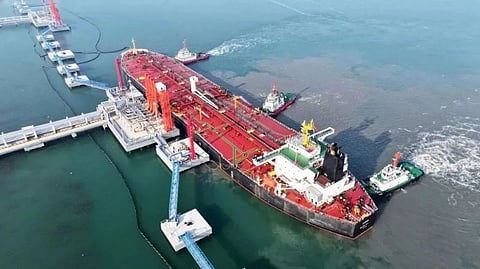


Oil prices fell on Tuesday, settling 1.5 per cent lower as the International Energy Agency (IEA) warned of a huge supply glut in 2026 and as trade tensions persisted between the US and China, the world’s two biggest economies.
Brent crude futures fell 93 cents, or 1.5 per cent, to settle at $62.39 a barrel. US West Texas Intermediate (WTI) crude was down 1.3 per cent, or 79 cents, at $58.70. Both contracts were at a five-month low.
In the previous session, Brent settled 0.9 per cent higher, and US WTI closed up one per cent.
The world oil market faces an even bigger surplus next year — as much as four million barrels per day — as OPEC+ producers and rivals lift output while demand remains sluggish, the IEA predicted.
A monthly report by the Organisation of the Petroleum Exporting Countries (OPEC) and allies including Russia was less bearish than the IEA’s outlook. It said the oil market’s supply shortfall would shrink in 2026 as the wider OPEC+ alliance proceeds with planned output increases.
However, executives at oil majors and top trading houses said they expect the global oil market to tighten in the medium to longer term, recovering from short-term weakness.
“The latest tensions between the US and China will also be a pressure point on crude as China’s economy could be in question if tensions stay elevated,” said Dennis Kissler, Senior Vice President of Trading at BOK Financial.
UBS analyst Giovanni Staunovo said a risk-off mood had taken hold as trade tensions weigh on sentiment and the IEA report was bearish.
US Treasury Secretary Scott Bessent said on Monday that President Donald Trump remained committed to meeting Chinese President Xi Jinping in South Korea this month, as Washington and Beijing seek to defuse tensions over tariff threats and export controls.
Last week, however, China expanded export controls on rare earths and Trump threatened 100 per cent tariffs and software export curbs from November 1. Beijing also announced sanctions on Tuesday against five US-linked subsidiaries of South Korean shipbuilder Hanwha Ocean, while the US and China will begin charging additional port fees on ocean shipping firms.
The Brent oil futures six-month spread traded at its smallest premium since early May, while the WTI spread was at its narrowest since January 2024.
Narrowing backwardation — the market term for immediate deliveries fetching a premium over later deliveries — suggests traders are making less money from selling oil in the spot market because near-term supply is perceived to be ample.
(Additional reporting by Enes Tunagur in London, Anjana Anil in Bengaluru and Emily Chow in Singapore; Editing by Susan Fenton, Barbara Lewis, Sharon Singleton, Frances Kerry and David Gregorio)
