

Spot Middle East crude premiums spiked to multi-year highs this week as Asian refiners scrambled for supply after the US and Israeli war with Iran paralysed Strait of Hormuz shipping, choking off oil flows, according to traders and Reuters data.
The price spike for Asia's staple oil means higher costs for regional refiners, which are struggling to find immediate alternatives and face output cuts, pushing up crude prices globally.
Benchmark Dubai’s cash premium jumped to $19.63 per barrel on Thursday, the highest in Reuters records dating from 2018. Premiums for Oman and Murban crude also soared, hitting $19.15 and $17.87 per barrel, respectively.
"Dubai spreads have surged as crude exports remain stranded within the Middle East Gulf, making price discovery nearly impossible," said Richard Jones, a crude analyst at Energy Aspects.
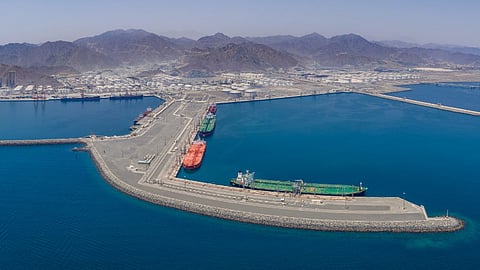
"We expect Strait of Hormuz disruptions to continue through at least mid-March. There are concerns that Dubai price assessment will be nearly impossible once Oman- and Fujairah-loading Murban shipment volumes are exhausted this cycle."
The conflict caused Brent crude to surge to July 2022 highs, widening its spread to Dubai swaps, known as the exchange of futures for swaps (EFS), to a premium of $10.42 per barrel on Wednesday, versus 69 cents at the start of 2026.
A widening of the price spread makes Brent-linked grades more expensive for buyers in Asia.
"The EFS spike reflects how difficult it is for Asia to quickly replace Middle Eastern crude. Asian buyers are competing more aggressively for crude available outside the strait," said Anh Pham, a senior LSEG oil analyst.
"Surging freight rates and longer voyage distances make it harder for barrels from more distant regions to move to Asia."
Still, some Asian refiners have snapped up crude from the US, Canada and Brazil at elevated premiums. For example, Canadian TMX crude's discount for deliveries to Asia narrowed to $1 a barrel to ICE Brent, versus over $4 a month ago.
Some traders said changes in the SP Global Platts Dubai crude price assessment have added to the benchmark's strength.
Platts on Monday excluded grades such as Qatari al-Shaheen, United Arab Emirates' Upper Zakum and also Murban loading from the Jebel Dhanna port from being nominated for delivery during the Market on Close process due to shipping disruptions.
That leaves just Murban loading from Fujairah port and Oman available for delivery, cutting deliverable crude by about 70 per cent, a Singapore-based trader said.
Another trader said the exclusion of Upper Zakum, which typically sets the benchmark, creates price distortion.
In a response to Reuters, SP Global Energy said its methodology for Dubai includes alternative delivery mechanisms because no single crude stream on its own can ensure continuity of liquidity.
"The fact that Platts Dubai continues to serve the market effectively through the potential delivery of more than two million barrels per day of oil demonstrates its resilience even in these most extraordinary of times," it said, adding that Platts is actively seeking market feedback while monitoring the situation closely.
TotalEnergies has been the main bidder on the Platts window, snapping up nine Oman and Murban cargoes in the past four days, trade data showed.
(Reporting by Siyi Liu and Florence Tan in Singapore; Editing by Harikrishnan Nair)
