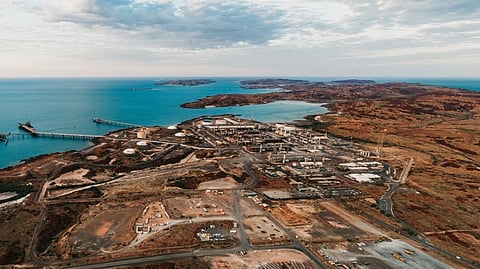


A UN special rapporteur can make submissions in a case challenging the government's decision to extend the licence for Woodside Energy's North West Shelf LNG facility for 40 years, Australia's Federal Court ruled on Tuesday.
The Australian Conservation Foundation (ACF) has brought the case against Environment Minister Murray Watt's September approval on the grounds that the impact on climate was excluded from his environmental assessment.
Astrid Puentes Riano, the UN's special rapporteur on the "human right to a clean, healthy and sustainable environment", applied to advise in November. Her advice will be informed by the International Court of Justice's July 2025 opinion that nations which do not take climate protection action could be in breach of international law.
She will act independently and offer advice as an amicus curie or "friend of the court."
It marks the first time a UN special rapporteur has joined an Australian legal case, the ACF said.
Hearings on the case will begin in Melbourne on July 21 and are expected to run for one week.
A Woodside spokesperson said the company had opposed Puentes Riano's application on procedural grounds, saying it was made independently and not on behalf of the UN. The federal and state approval assessment processes were "comprehensive and extensive," the spokesperson added.
ACF campaigner Piper Rollins said that the court's acceptance of the special rapporteur indicates it agrees that the International Court of Justice's ruling, "should be considered in relation to the North West Shelf."
Australia's fossil fuel companies have fought off multiple legal challenges to projects in recent years. Santos' Barossa gas field development suffered a lengthy delay due to a case that was ultimately dismissed on appeal.
The ACF case is one of three being brought against the extension granted to Australia's second-largest liquefied natural gas plant, which shipped its first cargo in 1989.
The ACF and another activist group have also separately launched legal challenges which argue that Watt's guidelines are insufficient to protect Murujuga Indigenous rock art in the area, which is up to 50,000 years old.
(Reporting by Helen Clark; Editing by Edwina Gibbs)
