
QatarEnergy has extended force majeure on liquefied natural gas (LNG) supplies to several Asian buyers and continues to lease out some of its LNG tankers through mid-October, trade sources said, signalling expectations that export disruptions could persist as the Strait of Hormuz remains closed.
The Iran war has forced QatarEnergy, one of the world's biggest LNG exporters, to shut liquefaction trains, declare force majeure on deliveries and suspend exports. Renewed Iranian attacks this month on tankers transiting the strait have clouded prospects for a return to pre-war flows.
Qatar accounts for about a fifth of global LNG trade, and a prolonged outage would tighten supplies and push up prices to key Asian buyers heading into the northern hemisphere winter.
Four trade sources, including a Petrobangla official, said QatarEnergy has extended force majeure on LNG supplies to buyers in South Korea, India and Bangladesh, with one source saying notices that had been due to expire in August and early September were now extended until mid-September.
"The uncertainty over Qatari supplies remains a concern for us," Petrobangla's acting chairman, Abdul Mannan, told Reuters.
"We have had to turn to the costlier spot market and are exploring other options, including government-to-government arrangements with alternative suppliers. If the disruption persists, it will inevitably add to the government's energy subsidy burden."
Two other trade sources added that they expect QatarEnergy to extend the force majeure, possibly until October.
The trade sources declined to be named because they were not authorised to speak to the media.
QatarEnergy did not immediately respond to a Reuters request for comment.
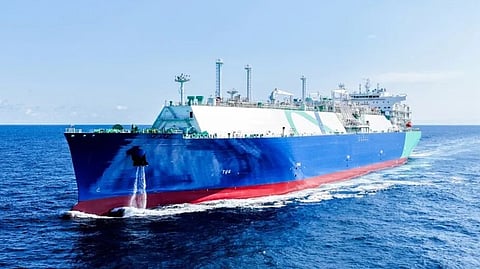
Meanwhile, QatarEnergy entities QatarEnergy LNG Marketing (QELM) and QatarEnergy Trading (QET) continue to offer some of their LNG tankers for lease through October, two shipbrokers said.
Although QatarEnergy has chartered out only several vessels from its current operating fleet of nearly 70 LNG carriers, trade sources said the move could signal expectations of prolonged disruption because the vessels are being leased on spot deals lasting for 30 to 90 days.
"Based on recent fixture reports, at least nine QELM/QET-controlled LNG carriers have been sub-chartered to third parties including Chevron, BP (twice), EnBW, Cheniere, Kansai, SOCAR, LMCS and Trafigura," said Ikram Elloumi, director of research at Wood Mackenzie.
The vessels have been leased despite falling freight rates in a rapidly weakening LNG freight market, she said.
"The willingness to fix vessels as rates declined suggests Qatar is prioritising fleet utilisation over waiting for a market recovery," she added.
(Reporting by Marwa Rashad in London, Emily Chow in Singapore and Ruma Paul in Dhaka; Editing by Susan Fenton and David Goodman)
