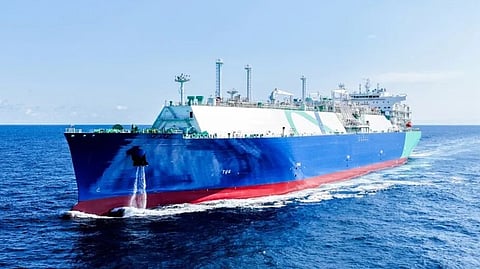


QatarEnergy (QE) has bought 33 spot LNG cargoes this year from the US for delivery to South Korea, Taiwan, Bangladesh, India and Japan, four trade and industry sources said, as it tried to reduce disruption to key customers after Qatari gas exports through the Strait of Hormuz were halted by the Iran war.
QE declared force majeure on its liquefied natural gas shipments after Iran closed the waterway to shipping, bottling up 20 per cent of global oil and gas supplies from major producers that export from terminals around the Persian Gulf.
The purchases of US LNG dwarf the four cargoes QE bought last year as it sought to keep some of its customers supplied despite the force majeure declaration, which releases it from contractual obligations. Qatar was seeking to protect its decades-long reputation as one of the world's most reliable gas suppliers, the sources said.
QE did not respond to emailed requests for comment on the LNG purchases.
The 33 cargoes amount to a third of a month's exports from QE before the conflict and were worth around $1 billion, according to Reuters calculations.
About 80 per cent of Qatar's LNG shipments are typically exported to buyers in Asia and the move was "a gesture of good faith" by QE towards some of its important customers, one source said.
QE wanted to show customers it valued them and was trying to help keep them supplied, another added.
QE bought the cargoes directly from US producer Venture Global LNG as well as picking up cargoes from some of Venture Global's customers, the sources said.
Venture Global declined to comment.
Out of the 33 cargoes, 28 have already been delivered and the remaining five are en route to South Korea, Taiwan and India, according to data analytics firm Kpler.
The US has become the world's largest LNG exporter in recent years and producers such as Venture Global have benefitted from demand for alternative supplies during both the Iran war and following Russia's invasion of Ukraine.
(Reporting by Marwa Rashad and Stephanie Kelly in London and Emily Chow in Singapore; Additional reporting by Aizhu Chen in Singapore; Editing by Nina Chestney, Simon Webb and Alexander Smith)
