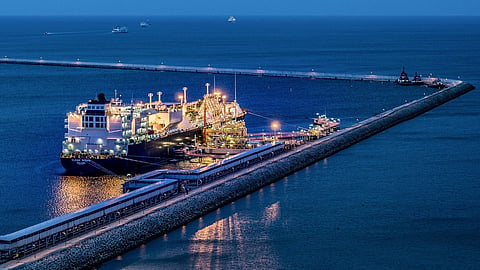

In a first since the Iran war began, a longstanding deal for liquefied natural gas from the Persian Gulf has been cancelled, a move analysts say could save Poland's Orlen up to $2 billion.
Gulf LNG powerhouse Qatar sustained heavy damage in an Iranian attack in March, forcing it to declare force majeure on deliveries and triggering a spike in prices, including of oil, which the deal was based on.
Force majeure was the reason Orlen cited on Tuesday for dropping the deal, a move analysts say, given its pricing is linked to soaring Brent crude oil, could save it a lot of money. Force majeure also means Orlen faces no penalty for breaking the contract, according to energy industry lawyers.
"Current market conditions offer alternative gas procurement options that are more favourable," an Orlen spokesperson said on Friday.
The spokesperson said current market options were better than those in the contract, which was signed in 2009 and involves pricing based on oil price benchmarks.
Orlen declined to comment on the potential savings. It estimated the contract value for 2026 at about €570 million ($655 million). QatarEnergy did not immediately respond to Reuters' requests for comment.
Orlen said in a regulatory filing on Tuesday that it ended the contract because force majeure had left QatarEnergy unable to meet its delivery obligations. The deal stays in force for 60 days after that notice.
The contract involved delivery of one million tonnes per year and was to last until 2034.
Market participants estimate the contract was priced at around 16 per cent of benchmark Brent crude futures prices.
With Brent futures currently at around $96 a barrel, that would equate to roughly $15 per standard unit of LNG - million British thermal units (mmBtu) - versus about $6 to $7 under many long-term US deals, analysts said.
Orlen would pay about $4 to $5.50 less for US LNG priced off Henry Hub, analysts said, citing calculations on forward price curves which assume Brent will fall from current levels.
Dropping the deal could save the Polish firm about $1.95 billion, or $1.58 billion after accounting for shipping costs, said Martin Senior, head of LNG pricing at Argus.
Other analysts and traders estimated savings of about $1.7 billion and $1.9 billion.
Senior said his estimate depends on whether Orlen would replace the volumes on the spot market, because the average European benchmark price at the Dutch TTF hub is only marginally below the oil-linked price over the rest of the contract.
In terms of tankers, it means Orlen is cancelling about 14 cargoes a year, or about 100 in total had the deal run its course until 2034.
"The prolonged force majeure on Qatari LNG supplies could provide buyers with an opportunity to reassess the economics of existing Brent-indexed contracts in the Middle East," said Aly Blakeway, head of Atlantic LNG at SP Global Energy.
In its filing, Orlen said the termination does not affect its supply security. It has a second contract with QatarEnergy, but linked to gas prices, which also remains in force through 2034. It also sources gas from Norway and the United States.
Earlier this month, US firm Venture Global began commercial deliveries from the first phase of its Plaquemines export plant in Louisiana, where Orlen is a long-term customer.
"With the timing, they could be happy with their supply from Plaquemines officially starting and not need to buy (replacement) volumes," Argus' Senior said.
(Reporting by Marwa Rashad in London and Marek Strzelecki in Warsaw; editing by Nina Chestney and Jason Neely)