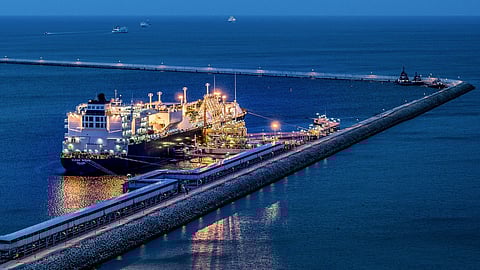

Polish energy firm Orlen and the Port of Gdynia Authority have signed an agreement to evaluate the use of liquefied natural gas (LNG) and bio-LNG as vessel fuels.
Under the arrangement, both parties plan to assess commercial demand for bunkering services alongside the infrastructure required to broaden alternative fuel availability along the Polish coast.
The joint review will examine regulatory requirements, operational conditions, and the logistical viability of ship-to-ship fuel transfers conducted directly from supply vessels.
Furthermore, technical evaluations will determine whether waterside bunkering can proceed safely alongside cargo handling operations to maintain terminal efficiency and prevent traffic disruption.
Focus will centre on the operational needs of commercial fleet users, particularly operators of scheduled ferry, container, and Ro-Ro services. The partners also intend to evaluate existing refuelling models deployed at other European ports while ensuring berth availability and operational safety.
“We want the Port of Gdynia to be prepared for what the future may bring, because no one can say with certainty which solutions will matter most 10 or 20 years from now,” observed Piotr Gorzeński, Chief Executive Officer of the Port of Gdynia Authority.
He noted that the initiative forms part of ongoing port development to respond to the changing technical requirements of modern vessels.
The collaboration comes as the shipping sector adapts to the FuelEU Maritime regulatory framework, which took effect in 2025 to govern energy used on board vessels. In response to evolving European standards, port facilities and commercial fleets are preparing for a market in which liquefied gas, methanol, ammonia, and hydrogen develop in parallel.

