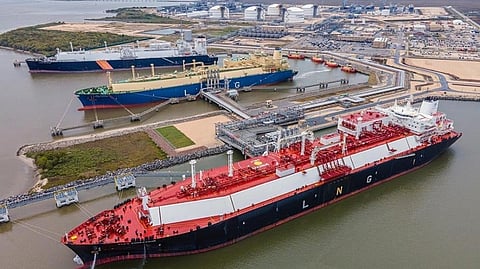


US LNG producers have shipped out record volumes of the fuel so far in 2026, but rising global natural gas prices may soon curb demand from cost-sensitive buyers.
Key forward gas and LNG prices in Europe and Asia — which together account for over 80 per cent of US LNG shipments — have climbed to their highest in more than three years, data from LSEG shows.
The ongoing US and Israeli war with Iran has disrupted freight traffic in the Persian Gulf and cut LNG flows from key exporter Qatar by over 60 per cent from the year before, according to Kpler, opening the door to higher prices and record US cargoes.
However, while reduced Qatari shipments have tightened markets, exporters may soon face softer demand as high cargo costs and a seasonal slowdown in gas consumption prompt buyers to delay purchases.
Estimated forward prices for LNG deliveries to Asia are set to climb to above $22 per million British thermal units (MMBtu) for October, November and December delivery, according to LSEG.
That compares to an average of just under $17 per MMBtu for 2026 so far, and would be the highest seen in Asia since the start of 2023 when global gas markets were reeling from Russia's invasion of Ukraine and disruptions to Russian gas flows.
Given that gas consumption in Asia tends to drop after summer — as demand for cooling systems eases — gas purchases by major consumers in Japan, China and South Korea are likely to soften until utilities move to restock as winter kicks in.
In Europe, gas consumers are expected to face benchmark natural gas prices in the Netherlands gas trading hub of around $21.50 to $22.50 per MMBtu over the October to December period, which would be the highest since late 2022, LSEG data shows.
Those elevated prices come as Europe's gas demand shows signs of softening. Expanding renewable electricity generation is displacing gas-fired power output, while households and businesses are increasingly electrifying heating and other energy uses in an effort to reduce fossil fuel consumption.
At the same time, European gas inventories remain well below the long-term average, meaning utilities will need to replenish stockpiles before heating demand picks up.
However, recent import trends suggest buyers are in no rush to secure additional LNG at current prices. Europe imported a total of 6.2 million tonnes of LNG in July, according to Kpler, the lowest July total since 2021.
That slow import pace suggests buyer concerns over fuel costs currently outweigh worries about potential supply security.
For US LNG sellers, the prospect of a near-term lull in importer demand will not be much of a concern, especially with record tallies already recorded for the first seven months of the year.
US firms exported just over 73 million tonnes of LNG from January through July, which is up 23 per cent from the same months in 2025, Kpler data shows.
But prolonged periods of high gas prices in key target markets may accelerate electrification efforts and the shift to alternative power sources.
This is especially likely in cost-sensitive markets in Asia which are also home to rapidly expanding renewables generation and strong growth in battery storage systems.
High natural gas prices may also serve to discourage discretionary purchases by storage operators, who will be wary of refilling tanks while prices are high in case demand stays weak through winter and limits reselling opportunities.
LNG exporters will also be mindful of planned steep increases in export volumes, with several liquefaction expansions expected in the US and Canada alone before the end of the decade.
Most of those planned expansion projects were greenlit on the assumption that global gas consumption will continue to expand in line with supply, in every market.
But if gas prices in key regions remain high enough to curb local demand and accelerate energy transition efforts, exporters may soon face serious competition when it comes to finding willing buyers, regardless of how much they may have to sell.
(Reporting by Gavin Maguire; Editing by Christopher Cushing)
