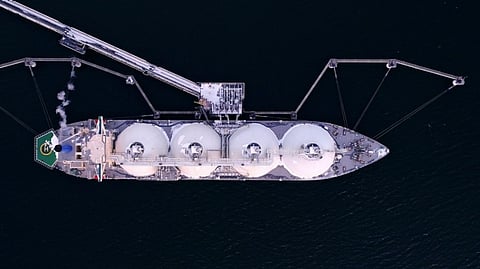


Pakistan LNG has issued its first spot tender for liquefied natural gas (LNG) since December 2023 amid supply shortfalls triggered by the US-Israeli war with Iran.
The company is seeking bids from international suppliers for three LNG cargoes of around 140,000 cubic metres each for delivery on April 27-30, and on May 1-7 and 8-14 at Port Qasim in Karachi, according to an advertisement on Thursday for the tender that closes on April 24.
Pakistan Federal Minister of Energy Awais Leghari told Reuters the LNG tender was aimed at meeting rising power demand and to cut reliance on costlier diesel and furnace oil.
Pakistan is not sure when it will get more cargoes from Qatar, Leghari said.
The tender also follows power shortages that triggered widespread outages last week, as a drop in hydropower and disruptions to LNG supplies exposed gaps in fuel availability amid rising demand.
Pakistan has not received any LNG cargoes loaded after the Middle East war began on February 28 and Iran shut off almost all shipping through the Strait of Hormuz, which connects the Gulf to the Indian Ocean.
Qatar depends on access through the strait to move its energy output. It supplied the bulk of the 6.64 million tonnes of LNG Pakistan imported last year, according to Kpler data.
Azerbaijan's state energy company SOCAR said on Tuesday it is ready to supply LNG to Pakistan as soon as it receives a request from Islamabad. A framework agreement signed in 2025 between SOCAR Trading and Pakistan LNG allows the South Asian buyer to buy cargoes under an accelerated procedure.
Islamabad cancelled 21 LNG cargoes for 2026–27 under a long-term deal with Eni, expecting slower demand growth and increased power supply from solar energy. The LNG supply disruptions tested that shift, even as a greater reliance on domestic and renewable power cushioned the impact.
Pakistan remains exposed to supply shocks, however, and LNG is still needed to meet peak summer demand and limit outages.
Iran's blockade of the Strait of Hormuz, which typically handled 20 per cent of daily global LNG flows before the war, pushed Asian spot prices to three-year highs, though they have pulled back some recently.
They were last at $16.05 per million British thermal units (mmBtu), a 54 per cent increase since February 23.
Analysts have slashed global LNG supply outlooks, and expect high prices and the supply shortage to cause demand destruction across Asia.
(Reporting by Emily Chow in Singapore and Ariba Shahid in Islamabad; Editing by Muralikumar Anantharaman, Christian Schmollinger and Tom Hogue)
