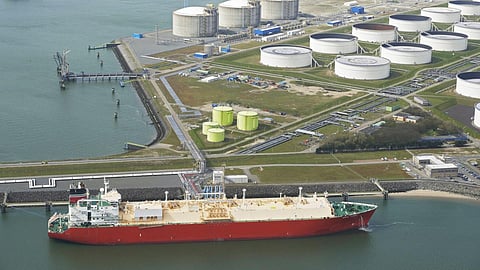


British and Dutch wholesale gas prices rose on Thursday morning as reports of tanker attacks in the gulf heightened fears of prolonged disruption to regional liquefied natural gas supplies from the region, while higher oil prices added further support.
The benchmark Dutch front-month contract at the TTF hub was up €2.41 at €52.40 per megawatt hour (MWh) or around $17.73/mmBtu, by 08:48 GMT, ICE data showed.
The British front-month contract was up 5.86p at 133.12p per therm, according to ICE data.
Around 20 per cent of the world's LNG typically transits through the Strait of Hormuz but shipping through the narrow passage has come to a near-standstill since the US and Israel began strikes on Iran on February 28.
The disruption has driven Qatar, one of the world's largest liquefied natural gas producers, to declare force majeure, tightening supplies.
"Europe and Asia are both highly exposed to LNG logistics, and with Qatar unable to load cargoes under force majeure, the global LNG balance has tightened," analysts at Rabobank said.
Europe's gas stores are currently 29.3 per cent full, data from Gas Infrastructure Europe showed. The elevated prices will raise the cost of refilling inventories.
"European storage levels are well below seasonal average and the hopes of refilling them during shoulder season (summer) appear to be fading, as the market rises further this morning," analysts at Mind Energy said.
Oil prices hit more than $100 a barrel on Thursday as Iran stepped up attacks on oil and transport facilities across the Middle East, while the International Energy Agency's proposal on Wednesday to release a record 400 million barrels failed to reassure the market.
High oil prices are bullish for gas because many LNG and pipeline gas contracts are index-linked to oil prices.
(Reporting By Susanna Twidale; Editing by Diti Pujara)
