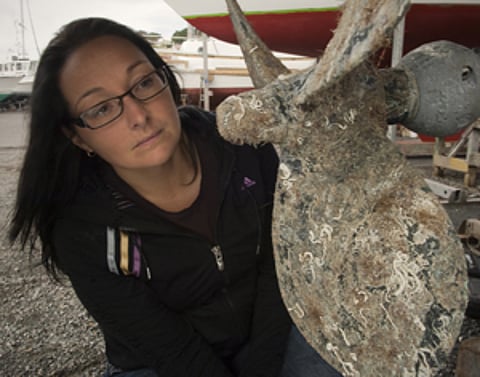

Underwater noise produced by vessels actively attracts marine creatures to their hulls, increasing fouling, according to research funded by the National Institute of Water and Atmospheric Research of New Zealand (NIWA), the University of Auckland and the Glenn Family Foundation.
The research aimed to test existing beliefs that sound triggers the larvae of many coastal organisms to settle more rapidly – such as fish and crab larvae being attracted to the sound of waves breaking on coastal reefs. Scientists recorded the underwater noise made by a range of vessels berthed at CentrePort Wellington and then, via submersible speakers, played those back to mussel larvae at two different intensities over several hours. Another control group of larvae was kept separately in a silent tank during the same period.
NIWA biosecurity scientist Dr Serena Wilkens noted that while all larvae were at the pre-settlement stage of swimming around and looking for a place to settle, those larvae exposed to the high-intensity vessel sound settled and metamorphosed "significantly quicker". As a result, the researchers are recommending that dampening or eliminating sound production or where possible switching to shore-based electrical supply, be employed by vessels while in port.
The research could have significant ramifications for the shipping industry, given fouling caused by the growth of marine creatures on hulls is understood to impart significant cost through increased drag and the cleaning work required. There are also implications for marine biosecurity as organisms found on hulls may be transported all around the world.
Iain MacIntyre
