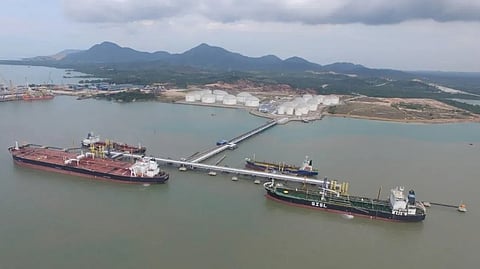


The European Union has proposed extending its sanctions against Russia to include ports in Georgia and Indonesia that handle Russian oil, the first time the bloc would target ports in third countries, a proposal document showed on Monday.
The proposal, reviewed by Reuters, would add Kulevi in Georgia and Karimun in Indonesia to the sanctions list, barring EU companies and individuals from conducting transactions with either port.
The measures form part of the EU's 20th sanctions package over Russia’s war in Ukraine. The package was jointly drafted by the EU's diplomatic service, the EEAS, and the European Commission, and was presented to EU countries on Monday.
EU sanctions require unanimity in order to be adopted into law. On Friday, Commission President Ursula von der Leyen said the package included sector-wide restrictions, and a shift from the Group of Seven nations' price cap to a full maritime-services ban on Russian crude.
The package also adds new import bans on metals such as nickel bars, iron ores and concentrates, unrefined and processed copper, and various scrap metals including aluminium. It would also prohibit imports of salt, ammonia, pebbles, silicon and furskins.
The proposal includes the use of an anti-circumvention tool against a third country for the first time. The new restrictions would ban sales of metal cutting machines and communications machines for voice, image and data transmissions like modems and routers to Kyrgyzstan.
The EU also proposed adding two Kyrgyz banks - Keremet and OJSC Capital Bank of Central Asia - to its sanctions list for providing crypto asset services to Russia, as well as banks in Laos and Tajikistan, while removing two Chinese lenders. If approved, the listed banks would be barred from transactions with EU individuals and companies.
To its sanctions framework that includes asset freezes and travel bans, the EEAS proposed adding 30 individuals and 64 companies. These include Bashneft, a listed subsidiary of Russia's oil behemoth Rosneft, as well as 8 Russian refineries, among them two major Rosneft-controlled plants - Tuapse and Syzran.
The proposal stops short of listing Rosneft or Lukoil, already hit by US sanctions.
(Reporting by Julia Payne. Editing by Peter Graff and Mark Potter)
