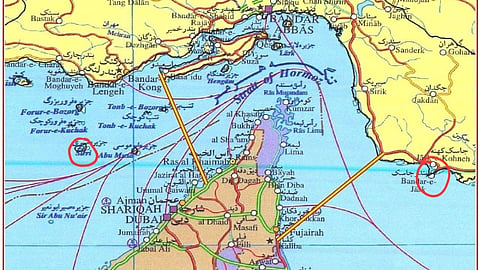

Iran has added more ships it deems as non-compliant and subject to fines, confiscation or detention if they try to sail through the Strait of Hormuz, according to a government website.
Tehran said on August 24 it had blacklisted 45 tankers that had broken its rules for navigating the Strait of Hormuz, and would take action against any vessels transferring loads, escalating its threats over the key waterway six months into a war that began with US and Israeli strikes on Iran.
In an update on the website of the Persian Gulf Strait Authority (PGSA), a body set up by Iran to manage the strait, 11 more ships were added - with the total of blacklisted vessels listed as 56.
Shipping industry sources said on Wednesday the update was made in the past 24 hours.
Iranian officials did not respond to a request for comment.
The restricted list includes very large crude carriers, liquefied natural gas and liquefied petroleum gas tankers, and clean product vessels, among others.
"Any vessel cooperating with listed vessels (via STS oil transfers, transshipment) will be added to the list," the PGSA said on its website.
"To request removal, vessels must submit a formal application with justifications."
Some of the named ships previously hit were owned by the United Arab Emirates' ADNOC Logistics and Services, ADNOC's subsidiary Navig8 Tankers, and Saudi Arabia's national shipping carrier Bahri.
After the announcement of the first blacklisted tankers, at least three Indian oil refiners and a global energy major planned to stop using the vessels due to security concerns, sources with direct knowledge of the matter told Reuters in late August.
The restrictions are likely to further constrain efforts to export oil via the strait, which before the war handled about 20 per cent of global oil and liquefied natural gas shipments but has since seen traffic reduced mostly to a trickle.
The US imposed sanctions on the PGSA in May, complicating any engagement with the body which could result in asset freezes by the US Treasury if any transactions or fees are paid.
(Reporting by Jonathan Saul Editing by Gareth Jones)
