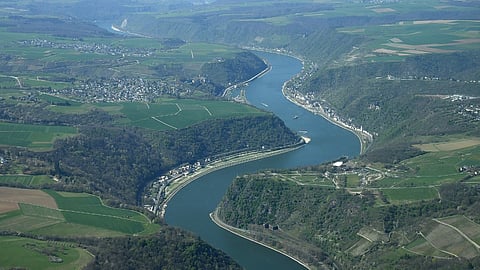

Low water levels in a current heatwave are preventing cargo vessels from sailing fully loaded on the Rhine river in Germany, increasing costs for freight transport, commodity traders said on Monday.
Shallow water means vessel operators are imposing surcharges on freight rates to compensate for vessels not sailing fully loaded, increasing costs for cargo owners. It also means loads must be spread among several vessels sailing part loaded, also increasing costs, traders said.
Low water is hampering shipping on all the river south of Duisburg and Cologne, including the chokepoint of Kaub, traders added. Vessels are often able to sail only 20 per cent full, with loads having to be divided among several ships.
Tanker barges are currently only able to carry about 1,200 tonnes through Duisburg and only 460 tonnes at Kaub, traders said. The cost of tanker barge transport from Rotterdam to Karlsruhe has risen to around €60 to €70 a tonne from around €45 at the end of June, traders said.
The Rhine is an important shipping route for commodities such as grains, minerals, ores, coal and oil products, including heating oil.
Dry weather and a continued heatwave week in river catchment areas this week mean improvement is not immediately in sight, traders said. But rain is forecast from Friday.
German companies faced supply bottlenecks and production problems in summer 2022 after a drought and heatwave led to unusually low Rhine water levels.
(Reporting by Michael Hogan in Hamburg, Editing by Louise Heavens)
