VESSEL REVIEW | Hagland Polaris – Self-discharging bulker fitted with hybrid propulsion arrangement
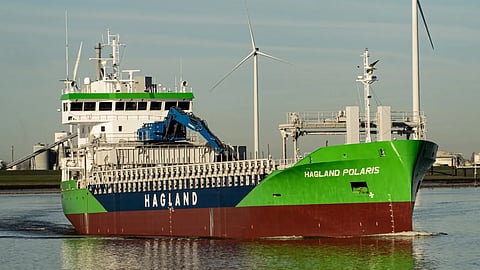
Norway's Hagland Shipping has taken delivery of a new self-discharging bulk carrier from Dutch shipyard Royal Bodewes.
Hagland Polaris is the fourth vessel in a series of bulk carriers built by Royal Bodewes for the same owner. Construction is ongoing on three additional sister ships, and the acquisition of all seven vessels was done through an investment of more than NOK800 million (US$86 million).
The newbuild has a steel hull, an LOA of 86.93 metres (285.2 feet), a beam of 15 metres (49 feet), a draught of 6.35 metres (20.8 feet), a depth of 8.37 metres (27.5 feet), a deadweight of approximately 5,000, and and total hold capacity of just over 6,000 cubic metres (200,000 cubic feet). As a self-discharging ship, she is ideal for operation in smaller ports with minimal cargo handling infrastructure.
Propulsion arrangement optimised for heavy duty use

The ship also boasts a suite of integrated solutions such as DC switchboards, a shore power connection, and a high-capacity Corvus Energy battery package. The battery hybrid system was supplied by Seam.
The propulsion arrangement also includes an ABC 1,590kW (2,130hp) IMO Tier III main engine, a controllable-pitch propeller, three 504kW main diesel generators, and a 112kW emergency generator. This arrangement is fed by fuel tanks with a total capacity of 138.64 cubic metres (30,497 gallons) and can deliver a service speed of 12.2 knots.
Compared to the oldest ships in Hagland's existing fleet, Hagland Polaris and her sisters are expected to reduce CO2 emissions by 40 to 50 per cent and NOx emissions by 90 to 95 per cent from delivery. A system that can recover the waste heat from the engines will produce enough electricity to cover the ship's hotel load.
The propulsion has been designed to permit future conversion to methanol operation. An AC cabinet for the electric excavator will meanwhile enable reduced-emission operation during port stays and while handling cargo.
Advanced control and monitoring systems
A Seam automation platform provides an intuitive interface that will allow the crew to manage complex energy flows with ease. Beyond local control, the platform will ensure a seamless and secure data connection between onboard systems and shore-based operations for fleet management purposes.
Construction of Hagland Polaris was undertaken in compliance with the requirements of Bureau Veritas and the Norwegian International Ship Register. She will be operated in conjunction with her earlier sisters Hagland Pioneer, Hagland Progress and Hagland Premier and her initial sailings will involve the transport of a range of bulk cargo types such as aggregates, wood chips and timber.
