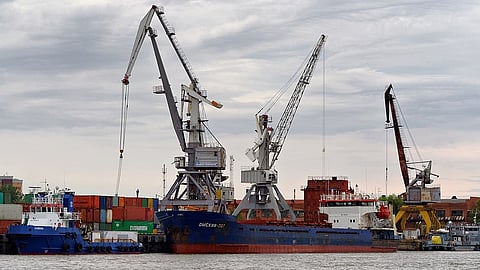


Russia sent wheat to Iran through the Caspian Sea for the first time in years in the first quarter of 2026, data showed on Friday, as the landlocked salt lake gains importance as a trade route between the two countries due to the war in the Middle East.
Iran had already been receiving Russian barley and corn via the Caspian Sea but wheat was being sent from the country's Black Sea ports to Iran's main grain terminals on the Strait of Hormuz.
The data from the agriculture ministry's grain quality control unit showed that in the first three months of the year, Russia shipped 500,000 tonnes of feed corn, 180,000 of feed barley and over 4,000 tonnes of food grade wheat from its Caspian ports to Iran, the third-largest buyer of Russian wheat this season.
"The Caspian ports have not seen export wheat for more than eight years, the entire flow was directed to the Black Sea, to Novorossiysk," said Alexander Sharov, head of consultancy RusIranExpo.
In March, Russia exported 300,000 tonnes of grain via the Caspian Sea, compared with almost no shipments in March 2025, when export restrictions were in place for barley and corn, according to shipping data from industry sources released this week.
The agriculture ministry data showed that grain shipments from the Astrakhan region rose 61 per cent to 730,000 tonnes in the first quarter. The shipments were mainly destined for Iran.
Russia, the world's largest wheat exporter, has been enhancing its Caspian Sea export logistics in recent years, also targeting markets in the Persian Gulf states, Iraq, and Afghanistan.
It operates three grain ports on the Caspian Sea, two in Astrakhan and one in Makhachkala, with a combined capacity of at least three million tonnes. A new, 1.5-million-tonne terminal in Makhachkala is expected to become operational in 2028.
(Reporting by Olga Popova; Writing by Gleb Bryanski, Kirsten Donovan)
