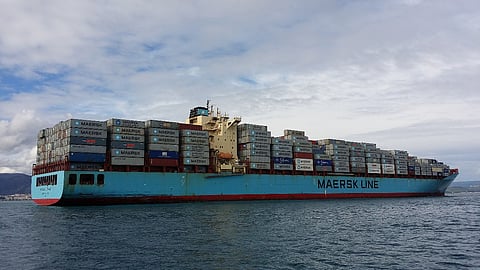


The Middle East region has a "pressing need" for food imports that have been disrupted by the outbreak of war in the gulf, the chair of the board of Danish container shipping group A.P. Moller-Maersk said on Wednesday.
According to the World Economic Forum, Gulf Cooperation Council countries - which include Saudi Arabia, Qatar and the United Arab Emirates - import up to 85 per cent of their food.
The war that began with US-Israeli strikes on Iran last month, followed by Iranian attacks across the region and its closing of the Strait of Hormuz, has brought shipping in the gulf to a near standstill, rippling across global supply chains.
Maersk temporarily suspended cargo bookings to many ports in the gulf region and introduced emergency bunker fuel surcharges around the world to compensate for rising fuel costs.
The company has more than 6,000 employees in the region providing essential transportation and logistic services to local customers and their communities, Maersk's Chair Robert Maersk Uggla said.
"This includes a pressing need for the import of food, often using cold chain solutions such as Maersk's reefer containers, a segment where we are the market leader in the region," he told the group's annual general meeting of shareholders.
"As the Strait of Hormuz is closed for now we try to find other ways to bring the cargo into the gulf," he added, without elaborating.
Rival container shipping company Hapag-Lloyd earlier on Wednesday said it faces additional costs of $40 million to $50 million a week due to the Iran crisis, citing higher fuel costs, insurance premiums and storage charges for containers.
(Reporting by Terje Solsvik; Editing by Jan Harvey)
