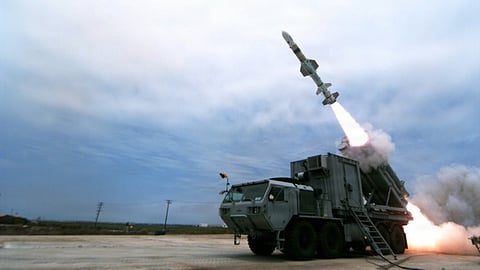

The US Navy's Harpoon coastal defence system (HCDS) has successfully executed a developmental test (DT) at Point Mugu Sea Range (PMSR) off California, validating the system's ability to engage and neutralise maritime threats.
The navy said the engagement was conducted over two days of intensive testing in late July by a combined team from the navy's Precision Strike Weapons program office, the Naval Air Weapons Station Technical Project Office, PMSR, and Boeing.
During the event, the Harpoon missile successfully launched from land and engaged the target vessel in near-shore/littoral waters.
The navy said HCDS is designed to provide a robust, land-based anti-ship capability, utilising the US armed forces' proven Harpoon anti-ship missile to protect vital coastal assets and strategic waterways.
The DT is part of a stringent process designed to evaluate combat readiness and effectiveness in at-sea, live fire and tracking events.
The navy said these tests are critical for assessing a capability and ensuring the latest weapon system enhancements are ready for naval service.
The launch platform consists of a wheeled vehicle with a command cabin and canisters housing up to four missiles.
The missile itself uses mid-course guidance with a radar seeker to attack surface ships. According to Naval Air Systems Command, the missile's active radar guidance, low-level, sea-skimming cruise trajectory, terminal mode sea-skim or pop-up manoeuvres and warhead design, assure high survivability and effectiveness.

