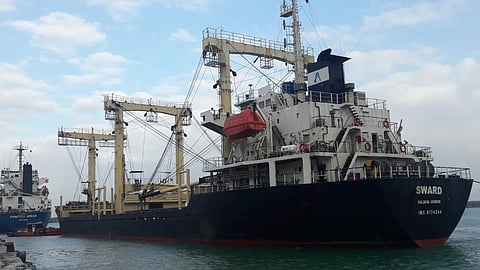

Somali pirates released the Saint Kitts and Nevis-flagged general cargo ship Sward and its 17 crew near Garacad, Puntland, on Friday, September 11.
The vessel had been held for about 138 days after armed groups seized it off Somalia on April 26 while it was sailing from the Suez Canal towards Mombasa. Its crew comprises 15 Syrian nationals and two Indian nationals.
The pirates left the ship after receiving a ransom and travelled ashore in small boats, then entered vehicles waiting near Garacad. The crew remained aboard and was reported to be in good health.
A Puntland security source told AFP that the pirates had, “received money to release the ship”.
The amount paid remains disputed. Haber Denizde reported a $200,000 payment, while other accounts gave estimates ranging from about $1.7 million to $2.7 million. Puntland sources and AFP-based reports confirmed that money changed hands but did not provide a consistent figure.
Sward is operated by Marshall Islands-based Asena Shipping and belongs to the fleet of Mersin-based Alphamoon Shipping. The ship was carrying about 4,500 tonnes of subsidised fertiliser intended for Kenya’s National Cereals and Produce Board (NCPB) and tea cooperatives.
The fertiliser remained in the ship’s holds throughout the seizure. Before Sward berths at Mombasa, the vessel is expected to undergo seaworthiness and regulatory inspections, while laboratory testing will determine whether the cargo’s composition or condition has deteriorated.
The fertiliser is to be distributed through NCPB warehouses to farmers if it passes the required checks. No arrival date for the vessel at Mombasa has been confirmed.
The pirates reportedly used Sward as a mothership, allowing them to launch attacks against vessels in international waters. Ships linked to operations involving Sward included two Iranian fishing vessels and the Cameroon-flagged cargo vessel Lutuf.
Accounts of Lutuf’s release also differ. Puntland sources cited a $2.5 million ransom, while Somalia’s federal government attributed the vessel’s release to prolonged pressure from Turkey’s navy and Somali forces.
Somali piracy activity has risen during 2026, with at least 15 attacks recorded in regional waters. Following the release of Sward and Lutuf, four commercial vessels were reported to remain in pirate custody: Honour 25, Eureka, Asana and Seamull.

