
Step by step, China is creating a Southeast Asian maritime order under its leadership. It has become a key investor in the region’s blue economy and is strengthening security ties with countries that are concerned about the unreliability of the United States.
How much the region will cooperate with this maritime order depends on whether China can curb bullying behaviour in the South China Sea, and whether other partners can provide viable alternatives.
China’s focus on the blue economy and maritime security reflects the priorities laid out in the latest Plan of Action to Implement the ASEAN-China Comprehensive Strategic Partnership (2026-2030).
China is one of the most important investors in the blue economy, claiming that, together with the Association of Southeast Asian Nations (ASEAN), it is investing between US$2.0 trillion and US$3.7 trillion from 2020 to 2050.
Initiatives include establishing green shipping lanes in the Strait of Malacca and supporting coastal, eco-friendly aquaculture ventures. Such projects are central to the interests of many Southeast Asian countries, with a focus on aligning economic growth and environmental protection.
In addition, China is actively leading multilateral efforts to shape the maritime environment, not only signing and ratifying the new Biodiversity Beyond National Jurisdiction Treaty but also bidding to host its secretariat. This is a symbolic move that positions China in contrast to the US, which has only signed the treaty and, in January, withdrew from 66 international treaties.
The main challenge of a China-led maritime order in Southeast Asia is the ongoing conflict and tensions in the South China Sea, where China illegally claims nearly all parts of the waters. But with growing geopolitical uncertainty over alliances with the US, more countries in the region are choosing to cooperate with, rather than confront, China.
For instance, Indonesia has agreed to a joint development project with China in areas of the sea where they have overlapping claims, despite criticisms over the project’s legality. Malaysia and Cambodia also conducted military drills with China last year.
Other countries such as Vietnam and the Philippines have voiced concerns about the reliability of the US as an ally if regional tensions escalate with China. A recently leaked document showed that senior defence officials in Vietnam are planning for a worst case scenario of "a second US invasion".
Amid these uncertain relations with the US, Vietnam has strengthened ties with China, last year conducting their first joint military drill.
Indeed, China has been looking to build a new maritime order since 2019, well before the onset of geopolitical uncertainty caused by the second Trump administration, through its proposal to build a "maritime community with a shared future".
But back then, many Southeast Asian countries were sceptical due to China’s coercive behaviour in the South China Sea. Some also still believed they could rely on the US as an alternative for cooperation.
But now, in light of increasing uncertainty over the US as a reliable partner, countries in the region will likely move closer to China. The success of a China-led maritime order in Southeast Asia will depend on two factors.
First, it depends on whether there is an alternative to China for cooperation in the maritime domain. Many Southeast Asian countries feel they cannot rely on the US under President Donald Trump or be confident that it will remain committed to the region. Trust has decreased further with America’s clear violation of international law over the past few months.
It also remains unclear whether other middle powers, such as Australia or Europe, can offer the same level of cooperation and resources as China.
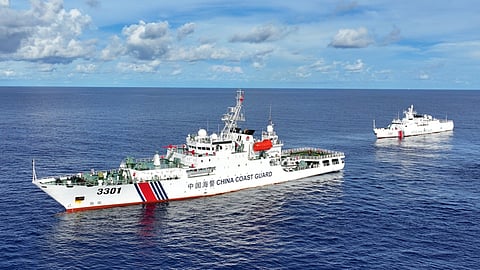
Secondly, the success of a China-led maritime order will be determined by China’s own behaviour in the South China Sea. If its navy and coast guard continue to be aggressive and bullying, there will always be resistance from the region. But if China shows greater cooperation, Southeast Asian countries may support the new maritime order that China is proposing.
Article reprinted with permission from the Australian Strategic Policy Institute's analysis and commentary site The Strategist.

