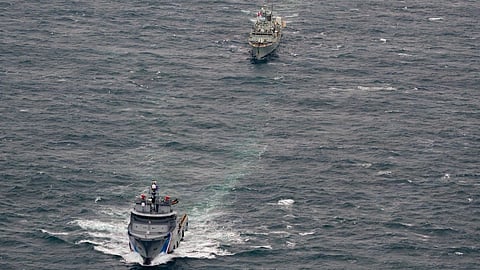

Exercise Northern Viking 2026 concluded on Thursday, September 3, after nine days of bilateral operations between the US and NATO allied nations.
More than 1,200 personnel participated in training and operational evolutions in the air, on land and at sea.
In addition to the US and Iceland, participating nations included Belgium, Denmark, France, Norway and Poland. Specialised assets from Allied Maritime Command and NATO Joint Force Command Norfolk also took part.
“By working closely with our Icelandic and NATO allies, we are strengthening interoperability and forging readiness across the air, maritime, and land domains in the defense of Iceland and the strategic lines of communication in the Greenland, Iceland, and United Kingdom, gap,” said Captain Leslie Slootmaker, Commander Task Force 68 and officer in tactical command. “This exercise demonstrates our [United States] unwavering commitment to Iceland and the security and stability of the North Atlantic, and the challenges of operating in this environment.”
Exercise Northern Viking is designed to strengthen interoperability and force readiness between the US, Iceland and other allied nations.
The exercise enabled critical multidomain command and control of joint and coalition forces defending Iceland and safeguarding the sea lines of communication within waterways between Greenland, Iceland and the United Kingdom.
The exercise was conducted across multiple locations in Iceland, with an additional command-and-control element established in Norway.
Commander, Task Force 68 and Underwater Construction Team One, Construction Dive Detachment Charlie contingent also operated in Ramsund, Norway, where personnel conducted command and control, dive salvage and survivability training throughout the exercise.
Commander, Task Force 66 and the Icelandic Coast Guard conducted bilateral training using the US Navy’s Lightfish solar-powered unmanned surface vessel designed for long-endurance missions. The training helped the two organisations improve their understanding of maritime activity in the Arctic region.

