
The Japan Maritime Self-Defence Force (JMSDF) has formally abolished its Fleet Escort Force (FEF) to allow the establishment of a new command known as the Fleet Surface Force (FSF).
The FEF, which had been active since 1961, has now made way for the FSF, which will have overall command of all JMSDF surface combatants and mine countermeasures (MCM) vessels.
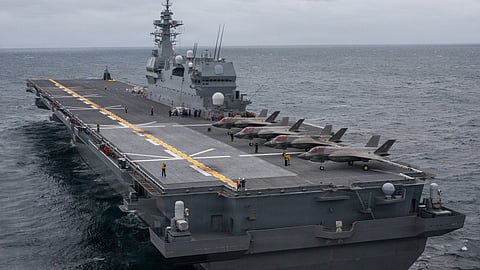
The escort flotillas under the FEF have been replaced with three surface warfare groups, each of which has a helicopter destroyer (DDH) as its flagship along with Aegis guided-missile destroyers and general-purpose destroyers.
Admiral Akira Saito, JMSDF Chief of Staff, had earlier said that the FSF will have fewer separate formations compared to the FEF but will have the same ship numbers and personnel levels overall.
The JMSDF believes it would be more viable to concentrate the same number of warships into fewer formations.
The FSF also features an amphibious and mine warfare group consisting of MCM vessels and amphibious vessels. As with the surface warfare groups, this group will have a DDH as its flagship.

